
How to Make Edibles for Beginners?
Written By QuickMedCards. Updated January 6, 2026
Learning how to make edibles at home as a beginner can feel intimidating. But it doesn’t have to be. This guide on making edibles for beginners keeps things simple. You’ll learn an easy, stress-free way to get started.
Ahead, you’ll learn how to break weed down (decarbing). How to make THC-infused butter (cannabutter) or oil. And how much you should take for your first edible. We’ll walk you through simple edible recipes, proper storage, and what’s legal in the United States. Everything presented here is supported by peer-reviewed research on the interaction of edibles with the body and their therapeutic benefits.
By the end of this page, you will have the answers to these questions:
- What are edibles?
- How to decarb weed for butter?
- What is the ideal cannabutter-making kit for beginners?
- How to make cannabutter?
- What are the alternative infusions? How to turn infusions into easy recipes?
- What are the things you should keep in mind as a first-time user?
- How to store and label your homemade edibles?
Looking for a Medical Marijuana Doctor?
Understanding Edible Marijuana
Edible marijuana offers a smoke-free way to get long-lasting relief without the risks of inhalation. Let’s explore exactly how they work and why it’s are becoming a top choice for many patients.
What Are Edibles?
Edibles are foods or drinks infused with cannabinoids, most often, delta-9-tetrahydrocannabinol (THC). Unlike inhalation, THC enters the bloodstream through digestion and liver metabolism, creating a delayed onset but a 4 to 8-hour duration.
A controlled study in healthy adults showed that oral THC peaks after 1.5 to 3 hours. In addition, the study revealed that the effects stick around for 6 to 8 hours after that.
Why Many Patients Prefer Edibles
Edibles offer several advantages that make them appealing to medical cannabis users, for example:
- Discreet, smoke-free relief
- Longer, steadier symptom control for pain and insomnia
- More controllable dosing than smoking
Edibles are popular, with over 40% of North Americans using them according to a 2020 review. The authors prioritize safety over preference, though. Moreover, they warn specifically about delayed effects and potential overdose.
The shift toward edibles over smoking shows that patients want treatment that fits naturally into their day. Edibles provide a reliable option without the health risks or judgment often attached to smoking. This gives people the confidence to take control of their own care. For many, the priority is moving away from a quick fix. They want a method that’s safe, consistent, and simple to use.
Decarboxylation and Dosing
Creating safe and effective edibles starts with “activating” the cannabis through heat and understanding the math behind the potency.
What is Decarboxylation
Raw cannabis won’t produce any effects on its own because it contains THCA, which isn’t intoxicating. To activate the THC, you need to heat it. This process is known as decarboxylation.
It sounds technical, but it’s easy to do. Just spread your flower loosely on a baking sheet lined with parchment paper and bake it at 240°F (115°C) for 40 minutes. Be sure to give it a quick stir halfway through.
Lab research confirms that this temperature effectively finishes the activation process while protecting the delicate terpenes. Terpenes are the compounds responsible for the plant’s flavor and aroma.
How to Make Potent Edibles from Cannabis Flower
Figuring out potency is all about reading the label. A simple rule of thumb is that the THC percentage tells you exactly how many milligrams are in a single gram. For example, if you have flower labeled at 20% THC, that means there are 200 mg of THC in every gram.
So, if you infuse 7 grams of that flower into a cup of butter, the math gives you a total of 1,400 mg of THC. Just keep in mind that this number is the ‘theoretical maximum.’ In reality, home extraction isn’t 100% efficient, so your final butter will likely be a little less potent than what the perfect math suggests.
Use our cannabutter ratio calculator below, or this formula:
Potency per serving = (flower grams × THC% × 1,000 × extraction efficiency) ÷ servings.
Cannabutter Ratio Calculator
Infused Oil Potency
Per Serving Potency
† This tool is for general educational use and does not replace lab testing. See disclaimer.
Finding Your Starting Dose
First-time edible users should begin with 2.5 to 5 mg THC. A dosing study showed that 2.5 mg is a safe limit for maintaining coordination. At this low amount, healthy adults didn’t experience any side effects or issues with their movement and reaction times. Wait at least two hours before taking more.
Edible Dosage Calculator
*Effects vary by person. See disclaimer.
Gathering Your Tools and Ingredients
Before you start cooking, you’ll need the right ingredients and gather a few simple kitchen supplies. Let’s help you decide between flower and concentrates and ensure you have all the necessary tools ready.
Flower vs. Concentrates
When choosing ingredients for your edibles, you mainly have two options: flower or concentrates. Flower is a popular choice because it’s affordable, easy to find, and preserves the plant’s natural flavors.
Conversely, concentrates, such as distillate or kief, offer significantly higher potency with minimal taste, and some don’t even require heating. However, if you are a beginner, it is usually best to start with flower because it makes it easier to control the dose without accidentally making things too strong.
The Beginner’s Cannabutter Making Kit
You don’t need a specialized cannabutter-making kit to get started. Most of what you need is probably already in your kitchen. Here’s what you’ll use for cooking with weed:
- Oven and baking sheet
- Mason jar or saucepan with lid
- Fine mesh strainer or cheesecloth
- Cooking thermometer (optional, but helps maintain 160 to 180°F)
- Airtight jars for storage
With these basic tools, you’re ready to make your first batch. The process is straightforward once you have everything laid out.
How to Make Cannabutter
Making your own cannabutter is easier than it looks and serves as the perfect base for your recipes. Follow these simple steps to activate, infuse, and strain your butter for the best results.
1. Quick Decarb
As we covered earlier, that gentle heating process is the secret to activating the THC while saving all that good flavor. Once you pull the flower out of the oven, just be sure to let it cool down completely before you mix it into your oil or butter.
2. Slow Infusion (Stovetop or Crockpot)
If you’re wondering how long to cook cannabutter, the slow infusion method is your answer. This approach gives you full control over timing and temperature:
- Melt 1 cup unsalted butter with 1 cup water in a saucepan.
- Add decarbed cannabis. Keep mixture at 170°F for 2 to 3 hours, stirring occasionally to prevent hotspots.
- For a set-and-forget method, use a slow cooker on the low setting.
How long to simmer cannabutter depends on your method. Two to three hours is the sweet spot for extracting THC without degrading it. The low, steady heat ensures you get the most out of your cannabis.
3. Strain and Cool
Give the mixture about 10 minutes to cool down, then strain it through a cheesecloth into a clean jar. Resist the urge to squeeze the cloth too hard. Squeezing releases chlorophyll, which gives the butter a bitter, grassy taste.
Finally, pop the jar in the fridge. Once the butter hardens into a solid block on top, you can simply pour out the water left at the bottom and throw it away.
Alternative Infusions: Oils, Tinctures & Ready-Made Bases
You don’t have to stick to butter; ingredients like coconut oil and distillate work great too. These options are perfect for making vegan treats or speeding up the process without the strong plant taste.
Coconut Oil Method (Canna Oil)
Coconut oil absorbs cannabinoids efficiently, thanks to its saturated fat content. The process is exactly the same as making butter, just swap in a cup of coconut oil instead. Once cooled, coconut oil stays semi-solid and is perfect for vegan recipes or topical balms.
Using Store-Bought Distillate
Using distillate is a huge time-saver because it is already activated. So, you can skip the oven entirely. Just warm the syringe in a mug of hot water to get the oil flowing. Then, stir your measured dose directly into melted butter or oil. It cuts the process down to just a few minutes and completely avoids that grassy plant taste.
Turning Your Infusion into Easy Edible Recipes
Now that your infused butter or oil is ready, you can easily turn it into delicious snacks. Try these simple recipes for classic brownies or quick peanut butter bites.
3-Step Pot Brownies
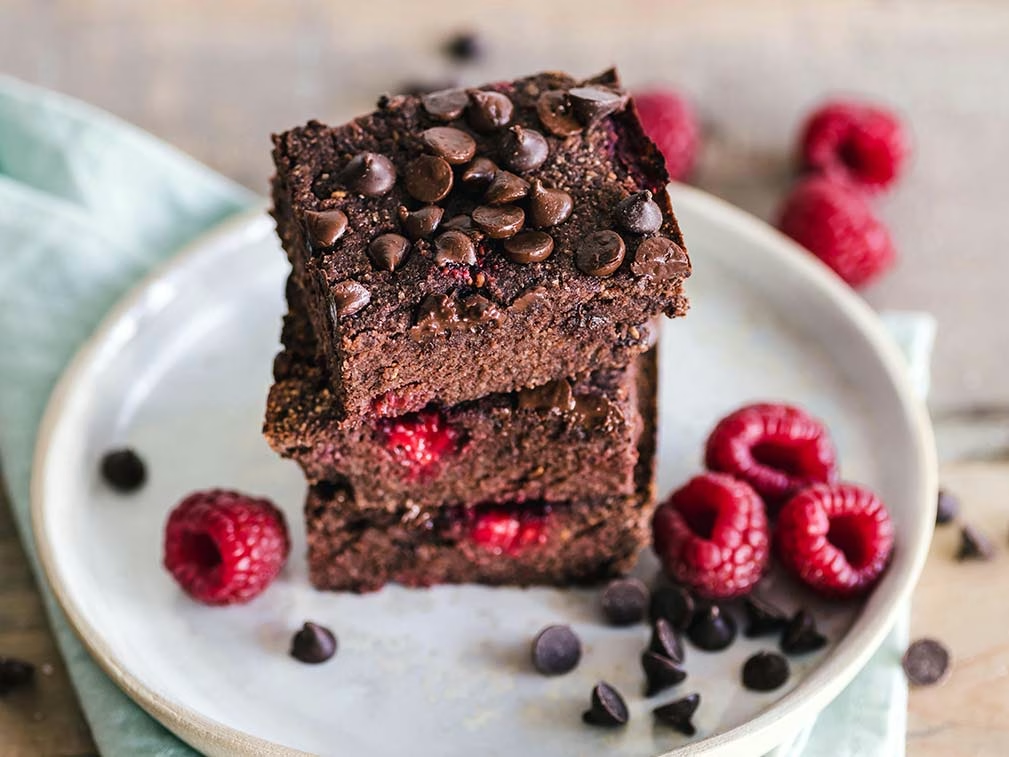
Learning how to make pot brownies is one of the easiest ways to start cooking with edibles. You can use any boxed brownie mix and swap in weed butter for brownies instead of regular butter:
- Melt ½ cup cannabutter.
- Mix boxed brownie batter as directed, replacing plain butter or oil with your infusion.
- Bake, cool, and cut into 16 squares. If your batch contains 200 mg THC, each brownie is 12.5 mg.
These weed brownies are simple to dose and easy to share. Just remember to label them clearly and keep track of how much THC is in each piece.
No-Bake Peanut Butter Balls
If you’re looking for no-bake edible recipes, these peanut butter balls are perfect. They come together quickly and don’t require any cooking:
- Combine 1 cup oats, ½ cup infused coconut oil, ½ cup peanut butter, ¼ cup honey, and a pinch of salt.
- Chill for 20 minutes.
- Roll into 30 balls (approximately 5 mg THC each if using 150 mg oil).
- Store in the fridge.
These bite-sized treats are great for microdosing. They’re easy to portion and stay fresh in the fridge for up to two weeks.
Safe Consumption Tips for First-Time Edible Users
Edibles work differently from smoking, so it takes a little planning to have a safe and positive experience. These tips will help you understand the timing, manage your dose, and avoid common mistakes.
Onset, Duration, and What to Expect
Edibles can take 30 to 120 minutes to kick in. Peak effects last 4 to 6 hours, with residual relaxation up to 8 hours. A 2024 study on driving showed subjective impairment for 7 hours after a 7.3 mg edible. Plan your schedule accordingly and avoid driving.
Avoiding Overconsumption
To ensure a good experience, always measure out your specific serving before you start snacking so you don’t accidentally overdo it. It is also smart to eat a balanced meal beforehand. The fats help your body absorb the THC and can prevent you from feeling nauseous.
If you ever do feel uncomfortable, just drink some water, find a quiet place to rest, and remind yourself that the feeling is temporary and will fade. Some people also find that taking a dose of CBD oil helps calm the anxiety, though research is still exploring how well this works.
Interactions and Health Considerations
THC is metabolized by liver enzymes CYP2C9 and CYP3A4, the same pathways used by warfarin and certain seizure medications. Consult your doctor before mixing.
Legal and Medical Considerations
Most medical markets cap homemade edibles to the same possession limits as flower, typically one ounce or equivalent. Recreational limits vary. Always store infused foods in child-resistant containers.
Why Use a Medical Marijuana Card
Getting a medical marijuana card opens the door to benefits you can’t get as a recreational user, like tax savings and stronger products. Here is why it is often worth the extra step for patients.
- Access to higher potency products
- Higher purchase limits
- Tax savings and lower total costs
- Additional legal protection
- Access to the medical market (medical dispensary menu) that may not be available to adult-use customers
- Reciprocity or “visiting patient” options in some states while traveling
Ready to enjoy the benefits? Get certified for medical marijuana from a licensed cannabis doctor.
Storing and Labeling Homemade Edibles
To keep your infusions fresh, store your butter or oil in the fridge for up to three weeks, or put it in the freezer for three months. For baked goods, they will stay good for about five days in a sealed container, though they freeze well too. The key is to keep everything away from heat, air, and light to ensure the potency stays stable.
Child-Resistant Storage
Invest in lockable, opaque tins or stash boxes. According to the American Association of Poison Control Centers, pediatric edible exposures are on the rise. Proper storage is the simplest prevention.
Key Takeaways
- Decarboxylation at 240°F for 40 minutes is the cornerstone of potent edibles.
- Start low at 2.5 to 5 mg THC, wait two hours, then decide on more.
- Cannabutter or coconut oil requires only basic kitchen gear and patience.
- Label, portion, and store treats securely to prevent accidental ingestion.
- A medical marijuana card provides legal cover, dosage advice, and cost savings.
Frequently Asked Questions
Still have questions on how to make edibles for beginners? You may find the answer below.
How long will homemade cannabutter last in the fridge?
Up to three weeks if sealed and kept below 40°F. Freeze for longer storage.
Can I skip decarboxylation if I cook the brownies anyway?
No. Typical baking temperatures are not high or long enough to fully convert THCA to THC inside the batter. Decarbing first ensures reliable potency.
What if I accidentally eat too much THC?
Don’t panic, recovering from edibles is possible. Stay calm, hydrate, and rest. Effects usually peak within four hours and fade gradually. If severe anxiety, rapid heart rate, or vomiting persists, seek medical help.
Is lecithin necessary in edibles?
Lecithin can improve texture and may aid cannabinoid absorption, but it is optional and not required for potency.
Do edibles show up on drug tests longer than smoking?
Yes, oral THC creates more 11-OH-THC, which metabolizes into THC-COOH, which is detectable for days. Expect similar or slightly longer detection windows compared with inhalation.
Disclaimer: This content is for educational purposes only and does not substitute professional medical advice. Cannabis effects vary by individual, and THC remains federally illegal. Always consult a qualified healthcare provider and follow your state’s laws before using or preparing cannabis products.
Get Your Medical Marijuana Card
Same-day appointments available for online medical marijuana evaluation.
Get your certification now!