
What Is Delta-11 THC?
Written By QuickMedCards. Updated January 13, 2026
Because research on delta-11 THC is limited, online claims about potency, benefits, and “legal everywhere” status can be confusing. This article sticks to what science and regulators do and don’t say so that you can make safer choices.
By the end of this page, you will have the answers to these questions:
- What is delta-11 THC, and how does it differ from 11-hydroxy-THC?
- Is Delta-11 THC natural or lab-made?
- What does research suggest about delta-11 THC effects and potency?
- What are the safety and common side effects of delta-11 THC?
- What are the potential product quality risks with hemp-derived THC isomers?
- Is Delta-11 THC legal in the U.S., and will it show up on a drug test?
- What are the practical tips if you decide to try Delta-11 THC?
Looking for a Medical Marijuana Doctor?
What Is Delta-11 THC?
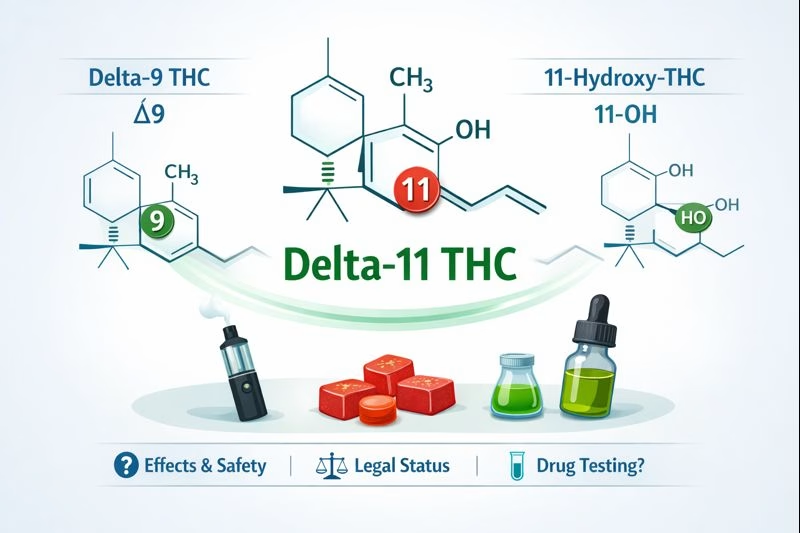
Delta-11 THC usually refers to delta-9(11)-THC, sometimes also called exo-THC. It’s one of several THC isomers, meaning it shares the same molecular formula as delta-9 THC but has a different structure.
The numbers in names like Delta-8, Delta-9, and Delta-11 tell you where a double bond is located in the molecule. These might seem like small differences, but they change how the compound affects your body and how it makes you feel.
It is important to realize that although Delta-11 THC has been in scientific literature for decades, we still don’t have much research on how it affects people.
How is Delta-11 THC different from 11-hydroxy-THC?
A very common mix-up is between delta-11 THC, an isomer in a product, and 11-hydroxy-THC (11-OH-THC), a metabolite your body makes. That simply means, Delta-11 is what you put into your body, and 11-Hydroxy is what your body makes out of it.
When you eat an edible, the THC has to go through the liver first. The liver stops it and converts a significant portion into a different, more potent compound called 11-hydroxy-THC. That’s one reason edibles can feel stronger and last longer than inhaled THC.
The CDC also notes that edible effects can take 30 minutes to 2 hours to kick in, which can lead people to take more than they need to.
If you want a simple refresher on edible timing and safer dosing, these articles are helpful:
- Smoking vs. edibles
- How to recover from edibles (and when to seek help)
Is Delta-11 THC Natural or Lab-Made?
Compared to standard Delta-9, Delta-11 THC is actually quite rare. When it does appear in modern products, it is usually the result of heavy processing rather than occurring naturally in the plant.
In fact, a study on cannabis vapes identified these as unnatural impurities. Basically, these compounds tend to appear as chemical byproducts when manufacturers create synthetic THC or highly refined extracts in a lab.
How delta-11 THC is usually made
Companies don’t always explain their methods. But generally, they create these intoxicating cannabinoids by turning common hemp compounds, like CBD, into THC isomers. Scientists have documented that certain substances, such as acids, can convert CBD into psychotropic cannabinoids.
For consumers, the takeaway isn’t the chemistry, it’s quality control. The fewer guardrails a market has, the more you need to verify what you’re buying.
What Do We Know About Delta-11 THC Effects and Potency?
We don’t have good data on how Delta-11 THC affects humans yet. Even the World Health Organization points out that there has been no real systematic testing on people.
What we do have is animal research. In studies with rats and monkeys, researchers reported that Delta-11 acted very similarly to standard Delta-9 THC. Essentially, the animals couldn’t tell the difference, but it actually appeared to be less potent.
Because the science is still so thin, you should treat any marketing claims about specific strength ratios with skepticism.
Safety and Side Effects
Even though the packaging might make Delta-11 sound like a brand-new discovery, you should treat it with the same caution as regular THC. Since animal studies show that it behaves just like standard THC, it is safer to assume the risks are pretty much the same.
THC can impair attention and short-term memory, slow reaction time, and increase heart rate, particularly right after use.
Don’t drive while you’re feeling the effects
The National Highway Traffic Safety Administration (NHTSA) draws a hard line here. It is never okay to drive while impaired by marijuana or any other drug.
It doesn’t matter if the product is technically legal or purchased at a regular store. If a substance affects your reaction time, decision-making, or coordination, getting behind the wheel is both dangerous and illegal. The rule is simple. If you feel different, you drive differently. So, just stay off the road.
Edibles and accidental overuse
With edibles, delayed onset is the danger zone. The CDC warns that because effects can take 30 minutes to 2 hours to appear, people may eat too much and experience adverse effects.
People who should be extra cautious
Talk with a clinician before using intoxicating cannabinoids if you are:
- Pregnant or trying to get pregnant
- Breastfeeding
- Living with severe anxiety, panic attacks, or a history of psychosis
- Managing cardiovascular disease or significant heart risk (THC can affect heart rate and blood pressure)
Product Quality Risks With Hemp-Derived THC Isomers
One of the biggest real-world concerns isn’t just delta-11 itself. It is actually about how the products are made, labeled, and tested.
For example, the FDA has raised concerns about delta-8 THC products, including adverse event reports and poison control exposures. Delta-8 and delta-11 are different compounds, but they often live in the same “intoxicating hemp” marketplace, where oversight can be inconsistent.
Practical ways to lower risk:
- Only buy products with a recent third-party COA that includes contaminant testing (not just potency).
- Be cautious with vapes from unknown sources.
- Avoid products packaged like candy, and store THC products locked away from kids.
A helpful lab report will clearly list the product’s batch number and the date. It should show the potency in milligrams instead of just percentages, and it needs to include results for things like residual solvents and heavy metals. If the report has missing pages, looks like a copy, or doesn’t match the product name, you should treat that as a red flag.
In many states, a medical marijuana card gives you access to state-regulated cannabis products. You can get access to a lot more benefits using an MMJ card. Talk to a licensed cannabis doctor and get certified for medical marijuana today.
Is Delta-11 THC Legal in the U.S.?
Legality is complicated and changes quickly. At the federal level, the 2018 Farm Bill officially defined hemp and took it off the Controlled Substances Act list. The CRS explains that to qualify as hemp, the cannabis and its derivatives must contain 0.3% or less delta-9 THC by dry weight.
This federal definition covers things like cannabinoids and isomers, too. However, states can still decide to restrict intoxicating products that are sold outside of specific marijuana programs. Recent reports describe a growing mix of different state restrictions and legal fights over intoxicating hemp products.
Don’t guess when it comes to the law. Check the current rules in your state to make sure what you’re doing is legal.
Will Delta-11 THC Show Up on a Drug Test?
It is safer to assume that it would show up in a drug test if you’re subject to workplace or court drug testing.
Federal workplace drug testing commonly looks for marijuana metabolites in urine. Clinical labs point out that standard urine tests usually look for THC-COOH. But newer THC isomers can complicate things and make the results hard to interpret.
If a positive test result could put your job, benefits, or legal standing at risk, your safest bet is to just avoid these products entirely.
Practical Tips If You Decide to Try Delta-11 THC
If you still plan to try delta-11 THC, adopt the following safety measures:
- Choose products with a recent third-party COA that includes contaminant testing.
- Start with a small amount and take it slow. This is especially important with edibles. Wait a while before taking more. It can take up to two hours for the effects to kick in.
- Don’t drive. Make sure to plan a safe ride or just stay home.
- Store your products safely. Keep them locked, labeled, and out of reach of kids and pets.
- Know when to get help. If someone has chest pain, breathing trouble, severe confusion, or can’t be awakened, call 911. For urgent questions, Poison Control is 1-800-222-1222.
Talk to a licensed cannabis doctor today to get a medical card and access the benefits of medical marijuana.
Key Takeaways
- Delta-11 THC usually refers to delta-9(11)-THC (exo-THC), a THC isomer that has limited human research.
- Delta-11 THC is not the same as 11-hydroxy-THC, the metabolite that helps explain why edibles can feel stronger and last longer.
- Animal studies suggest delta-11 can produce THC-like effects, but often with lower potency than delta-9 THC in those models.
- Unregulated intoxicating hemp products may carry added risks from inconsistent manufacturing and labeling.
- If drug testing matters, assume delta-11 products could increase your risk of a positive test.
Frequently Asked Questions
Below are answers to common questions about delta-11 THC, including how it differs from other forms of THC.
Is delta-11 THC the same as delta-9 THC?
No. Delta-11 THC (often delta-9(11)-THC or exo-THC) is a different THC isomer. It may act similarly in some animal models, but it hasn’t been well studied in humans.
Is delta-11 THC the same as 11-hydroxy-THC?
No. 11-hydroxy-THC is a metabolite your body makes after consuming THC, especially from edibles. Delta-11 THC is an isomer that may be present in products.
Is delta-11 THC legal?
It depends on your state. Federal hemp rules focus on delta-9 THC limits, but states can restrict intoxicating hemp-derived cannabinoids, and laws can change quickly.
Will delta-11 THC show up on a drug test?
It might. Many drug tests look for THC metabolites, and labs note that THC isomers can complicate testing. If a test could affect your job or legal status, avoid intoxicating cannabinoids.
What’s the safest way to approach delta-11 products?
If you choose to use them, prioritize products with a full COA, avoid driving while impaired, and be cautious with edibles because effects can take up to 2 hours to appear.
Disclaimer: This article is for informational purposes only and does not constitute medical or legal advice. Cannabis laws change frequently, and individual responses to cannabinoids vary significantly. Always consult a qualified healthcare professional before using any cannabis product, and verify current regulations in your jurisdiction.
Get Your Medical Marijuana Card
Same-day appointments available for online medical marijuana evaluation.
Get your certification now!