
Can You Fly with Delta-8 Products?
Written By QuickMedCards. Updated January 16, 2026
If you’ve ever stared at your carry-on the night before a flight and wondered if you can fly with delta-8 products, this article is for you. delta-8 THC comes from hemp. It is federally legal as long as it contains less than 0.3 percent delta-9 THC. However, when it comes to air travel, the rules are still somewhat of a gray area.
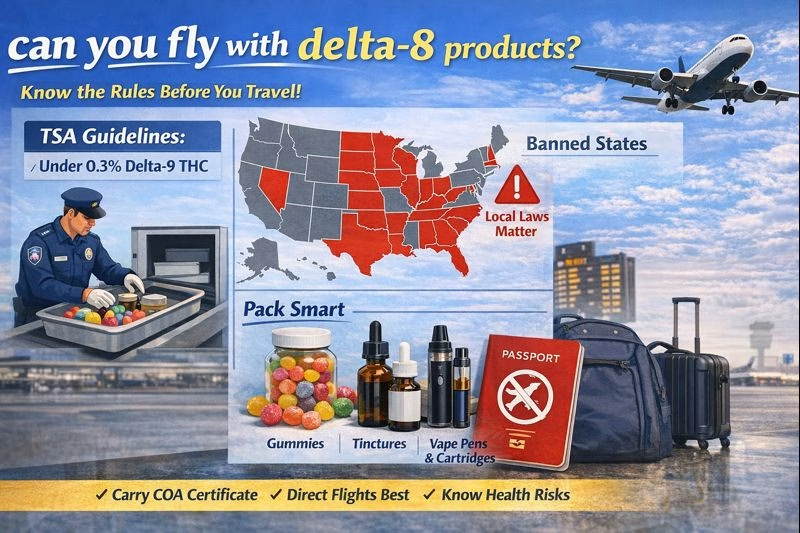
The Transportation Security Administration (TSA) allows hemp products that meet this federal threshold. Yet, several U.S. states ban or restrict delta-8 altogether, and international airports apply even stricter drug laws.
In this article, we’ll cover the laws, TSA rules, packing tips, and safety info you need. We’ll help you decide if it’s worth bringing your delta-8 on your flight, or if you’re better off leaving it at home.
By the end of this page, you will have the answers to these questions:
- What is delta-8 THC, and why is flying with it so confusing?
- What are the TSA rules for hemp-derived products?
- Which U.S. states ban or restrict delta-8, and how does that affect flight plans?
- Is it ever safe to take delta-8 on an international flight?
- What are the safest ways to pack delta-8 gummies, tinctures, or vapes in carry-on or checked luggage?
- What health benefits and risks should travelers weigh before using delta-8 in the air?
- What are your legal alternatives if you can’t bring delta-8?
Looking for a Medical Marijuana Doctor?
What Is Delta-8 THC, and Why Is Flying With It So Confusing?
Delta-8 THC is one of more than 100 cannabinoids found in Cannabis sativa. Unlike delta-9 THC, the primary psychoactive compound in marijuana, delta-8 occurs naturally in only trace amounts. Manufacturers typically convert CBD from hemp into delta-8 through isomerization.
Many delta-8 products are sold as “hemp-derived,” which is why they’ve been widely available in gas stations, smoke shops, and online. But the problem is that “hemp-derived” doesn’t automatically mean safe to fly with. Delta-8 products can be produced in different ways, can vary a lot in potency, and may contain other cannabinoids.
The 2018 Farm Bill and Hemp Legality
The Agriculture Improvement Act of 2018 removed “hemp” from the Controlled Substances Act, defining it as cannabis with no more than 0.3 percent delta-9 THC on a dry-weight basis. Hemp-derived cannabinoids, extracts, and isomers, including delta-8, are therefore federally legal, provided they stay under that delta-9 threshold.
DEA and FDA Positions
In 2021, the Drug Enforcement Administration (DEA) clarified that synthetically produced delta-8 remains a Schedule I substance, but hemp-derived delta-8 that meets the 0.3 percent delta-9 limit does not.
Meanwhile, the FDA warns that delta-8 products are unregulated, may contain contaminants, and can cause psychoactive effects. Always buy lab-tested products with certificates of analysis (COAs).
Get certified for medical marijuana by a licensed cannabis physician. Talk to a doctor today.
What are the TSA Rules for Hemp-Derived Products?
TSA screening focuses on security threats, not drug enforcement. According to its current policy, passengers may carry products that contain no more than 0.3 percent delta-9 THC on a dry weight basis or are approved by the FDA. That language covers federally compliant delta-8 products.
However, TSA officers must report suspected violations of law to local authorities. If you land in a state that bans delta-8, possession could lead to confiscation or fines.
Does TSA Treat Delta-8 Like CBD?
This is where things get a little tricky. TSA guidelines mention marijuana and CBD, but they don’t explicitly list rules for delta-8. This is important because even though delta-8 is sold as “hemp,” it is still intoxicating and is often chemically processed.
But the TSA agents don’t have labs at the checkpoint. If your gummies, oil, or vape carts look like weed products, assume they will raise questions, even if you know they are legally hemp.
Carry-On vs. Checked Bags
Knowing where to pack your delta-8 products can save you time and hassle at security. Here is a quick guide on what goes in your carry-on versus your checked bag:
- Solid items such as gummies or capsules are allowed in carry-on and checked luggage.
- For liquid tinctures, follow the 3-1-1 liquid rule (3.4 oz/100 mL or less, in a clear quart-size bag).
- Vape cartridges or disposable pens must stay in your carry-on. Lithium-ion batteries cannot be packed in checked bags. Remove cartridges from batteries, store them in a sealed plastic case to prevent leaks, and toggle any child-safety locks.
Tips for Smooth Screening
Getting through security with delta-8 doesn’t have to be stressful. Just follow these simple tips to keep your screening process smooth and hassle-free:
- Keep products in original, clearly labeled packaging.
- Print and pack the COA showing < 0.3 percent delta-9 THC.
- Pack only what you need for the trip. Excess quantities look suspicious.
- Do not advertise. Store delta-8 inside rather than in outer pockets.
- Be polite and truthful if questioned. Misrepresentation could escalate to law enforcement.
Keep in mind that these are just suggestions. The TSA officer always has the final say on whether an item is allowed through the checkpoint.
State Laws You Need to Know Before You Fly
- Alaska
- Colorado
- Delaware
- Hawaii
- Idaho
- Iowa
- Minnesota
- Montana
- Nevada
- New York
- North Dakota
- Oregon
- Rhode Island
- Utah
- Vermont
Some additional states regulate delta-8 under their adult-use cannabis programs, meaning you may need to purchase through licensed dispensaries and keep products within state-approved packaging limits. These states include the following:
- Arizona
- California
- Connecticut
- Michigan
- Washington
Important Update: A new federal law taking effect November 12, 2026, will redefine hemp to exclude synthetically derived cannabinoids like delta-8 and impose a 0.4 mg total THC per container limit, effectively banning most delta-8 products nationwide.
Plan Your Route
There are three points to keep in mind when you plan your trip:
- Direct Flights: If you depart from and arrive in delta-8-friendly states, the risk is lower.
- Layovers: Passing through a banned-state airport could expose you to state law even if you never exit the terminal.
- Return Trips: Remember that products purchased legally on vacation may be illegal back home.
How to Check Current Status
Before traveling with medical cannabis, it’s important to verify the rules at your destination. Here’s how to check the current status:
- Consult updated state resources (the Department of Agriculture or health websites).
- Contact the destination airport’s police unit for confirmation if you are uncertain.
Does your destination accept out-of-state cards? If the answer is yes, don’t risk it. Get your medical marijuana card online before you travel for a hassle-free experience.
Can You Fly Internationally with Delta-8?
Do not risk it. While hemp is federally legal in the United States, many countries classify all THC isomers as controlled substances regardless of the delta-9 percentage. Customs agencies can detain travelers, levy heavy fines, or impose criminal penalties. Even Canada, which legalized cannabis nationally, restricts cannabis imports and exports without special permits.
If you must have cannabinoid support abroad, research whether CBD isolate (0 percent THC) is legal at your destination. You can also consult a local physician on arrival for region-approved products.
Why Airline Rules Matter Even If You Think It’s Legal
Airline policy is a significant concern because, even if you pass screening, you can still encounter issues at check-in, at the gate, or onboard. Airlines can take a conservative approach because they’re operating under federal aviation rules and don’t want safety or legal complications.
So, even if you believe your delta-8 product qualifies as hemp, you’re still betting that everyone involved (security, staff, local authorities) will interpret it the same way you do, and that’s not a guaranteed bet.
What Delta Air Lines Says
Delta Air Lines states that it does not allow passengers to transport marijuana on its flights. That is because TSA considers marijuana illegal under federal law and may refer travelers to law enforcement.
Delta’s policy page is specifically written about marijuana, not delta-8. But from a traveler’s point of view, there are risks. If your delta-8 product is treated as THC/cannabis by staff or law enforcement, you could still face consequences. These include confiscation, questioning, or being denied boarding.
Best Practices for Packing Delta-8 Products
Packing your delta-8 correctly can help, but carrying it still carries significant risks. If you decide to travel with these products despite the legal gray areas, here is a guide to handling gummies, oils, and vapes as safely as possible.
Can You Fly with Delta-8 Gummies and Edibles?
dPacking gummies is usually easier than oils because they aren’t liquids and don’t use batteries. However, they can be the most confusing option legally. Since they often look exactly like marijuana edibles, they can attract unwanted attention. Remember that TSA agents and airline staff are not there to check your hemp certificates:
If you choose to travel with gummies anyway, you should follow the guidelines below:
- Keep them in the original packaging.
- Choose heat-stable formulations to prevent them from melting in the overhead bin.
- Store in an opaque vitamin bottle to reduce odor.
- Avoid anything labeled in a way that screams “THC candy”.
- Avoid carrying large quantities that look like resale items.
Also consider the public health side, delta-8 edibles can look like candy to kids, and federal agencies have raised concerns about delta-8 products being marketed in risky ways.
Can You Fly with Delta-8 Tinctures and Oils?
Tinctures and oils add two more issues. Since they are liquids, you have to deal with the standard carry-on restrictions. On top of that, they can look exactly like cannabis oil, which is still heavily policed in many places.
If you’re going to carry any kind of oil, follow the guidelines below:
- Use a shatter-resistant plastic dropper bottle.
- Tighten caps firmly and place them inside a sealed bag.
- For new, unopened products, keep them sealed.
- Label them clearly.
- Place them in the smallest, travel-appropriate container possible.
Can You Fly with Delta-8 Vape Pens and Cartridges?
Vapes are the most complicated because of battery fire rules. FAA guidance is clear. You have to carry your e-cigarettes and vaping devices in your carry-on bag. You cannot pack them in your checked luggage.
Delta Air Lines’ own baggage rules also say e-cigarettes can be brought as carry-on items only. They do not allow you to use or recharge them on the plane.
So, even if you ignore the legal side for a second, from a pure flight-safety standpoint:
- You must pack your vaping device in your carry-on bag only.
- Spare batteries must also go in your carry-on, and you need to protect them from short-circuiting.
- You are not allowed to use or recharge your device while you are on the plane.
Other points to keep in mind if you decide to carry delta-8 vapes or cartridges:
- Empty or nearly empty cartridges minimize leaks caused by cabin-pressure changes.
- Bring a battery case with an on/off switch, or unscrew the cartridge.
Carry the Necessary Documentation
Please keep the following documents ready for quick review:
- Product COA with batch number
- Invoice or receipt showing purchase date and retailer
- Copy of the 2018 Farm Bill excerpt (optional but reassuring)
Having this paperwork ready at a moment’s notice can help you quickly clear up any confusion and prove that your products are compliant with the law.
Health Benefits and Considerations for Travelers
- Antiemetic: A small pediatric study found that delta-8 prevented chemotherapy-induced vomiting with minimal side effects.
- Anxiolytic: Preclinical data show delta-8 binds CB1 receptors with about 50-70 percent potency of delta-9, possibly producing a calmer psychoactive profile.
- Analgesic: Animal studies indicate delta-8 may modulate pain through CB1 activation.
Practical Safety Reminders for Travel Days
- Don’t take delta-8 before going through security. If you appear impaired, you can be denied boarding.
- Never use delta-8 on the plane. Smoking/vaping isn’t allowed, and airline policy can escalate quickly.
- Avoid mixing delta-8 with alcohol. Many people underestimate the combo.
- If you’re traveling with family, treat delta-8 like any other intoxicating product and store it securely.
Possible Side Effects
Dry mouth, red eyes, delayed reaction time, and mild euphoria can still impair judgment. Altitude, dehydration, and in-flight alcohol magnify these effects. Never consume delta-8 in the airport or on the plane. It is illegal under federal aviation regulations.
If you use cannabinoids to manage anxiety, nausea, or pain symptoms, it’s worth talking to a clinician about safer, legal options tailored to your health history.
An alternative: Plan to Buy (Legally) at Your Destination
The main risk with flying is usually the act of carrying these items with you. If delta-8 is legal at your destination, it is often smarter to just buy it after you land. This avoids the stress of the TSA screening entirely. Of course, you still need to respect the local laws wherever you are.
Also, keep in mind that crossing state lines with marijuana products (distinct from delta-8) can still be illegal, even if it is for medical use.
Alternatives When You Cannot Bring Delta-8
- CBD Isolate: CBD isolate products offer calming effects without the presence of THC.
- Prescription Nausea Meds: You can utilize prescription nausea medications, such as ondansetron, to manage motion sickness.
- Relaxation Techniques: Employing relaxation techniques, such as breathing exercises or guided meditation apps, can be helpful during takeoff.
- Buy Legal Products at Your Destination: It is advisable to buy legal products upon arriving at your destination, as some states have licensed hemp or adult-use stores.
Key Takeaways
- Delta-8 products that contain less than 0.3 percent delta-9 THC are federally legal for domestic flights, but several states ban them outright.
- The agency allows hemp products, yet defers to local law enforcement if violations arise. Keep COAs and original packaging handy.
- Gummies and tinctures go in either bag (follow liquid limits), while vape batteries stay in carry-on only.
- Avoid bringing delta-8 across borders; penalties can be severe.
- Early studies show antiemetic and anxiolytic promise, but side effects and lack of regulation warrant cautious use.
Frequently Asked Questions
Below are answers to common questions about flying with delta-8 products.
Is delta-8 legal in all 50 states?
No. At least 15 states ban delta-8 entirely, and others regulate it under adult-use cannabis rules. Check state law before you fly.
Will TSA confiscate my delta-8 gummies?
If your product is hemp-derived and under 0.3 percent delta-9 THC, TSA is unlikely to confiscate it, but officers can involve local police if they suspect illegality at your departure or arrival location.
Can I take delta-8 on a red-eye flight to calm nerves?
You may carry delta-8, but consuming any THC product on board violates federal aviation regulations. Wait until you land in a legal jurisdiction before using it.
Do Certificates of Analysis (COAs) really matter at the security check?
Yes. A printed COA showing compliant THC levels can quickly verify legality and prevent misunderstandings during screening.
What happens if I forget delta-8 in my checked luggage and land in a banned state?
Local law applies. You could face confiscation or penalties. Consider disposing of banned products before landing, or choose alternative cannabinoids like CBD isolate.
What if I’m flying to a state where delta-8 is restricted?
The safest option is not to bring it. If delta-8 is restricted where you land, possessing it can trigger consequences even if you bought it legally somewhere else. Before you travel, confirm current rules for both states using trustworthy sources.
Disclaimer: This article is for informational purposes only and does not constitute legal or medical advice. Cannabis laws change frequently. Always verify current federal, state, and international regulations and consult a qualified healthcare professional before traveling with or consuming delta-8 THC.
Get Your Medical Marijuana Card
Same-day appointments available for online medical marijuana evaluation.
Get your certification now!