
How to Stay High Longer?
Written By QuickMedCards. Updated January 6, 2026
For medical and adult-use consumers who want steady, soothing relief without constant re-dosing, how to stay high longer is a common question they have. How long the effects last really depends on the dose, your body chemistry, and how you consume it.
If you inhale, it usually kicks in fast. Edibles are a different story. They come on much slower, taking anywhere from 30 minutes to 2 hours to start. Because of that delay and their duration, they can easily catch people off guard.
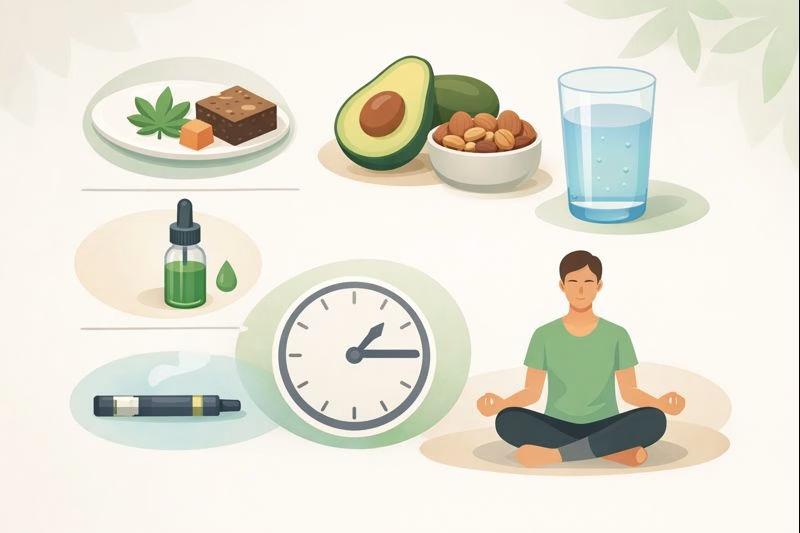
In this article, we explain the science behind a cannabis high, then share practical, research-backed tips to prolong it, such as choosing slow-release products, pairing THC with the right foods, and managing tolerance.
You will learn which terpenes (like myrcene) may enhance absorption, why healthy fats matter, and how mindfulness routines can deepen relaxation. All strategies respect U.S. laws and place safety first, so that you can enjoy your medical cannabis comfortably and responsibly.
By the end of this page, you will have the answers to these questions:
- What determines how long a cannabis high lasts?
- Which consumption methods last longer?
- How can diet, exercise, and environment naturally lengthen your high?
- What long-term habits prevent tolerance?
- When should you pause or seek medical advice for safer use?
- How can you stay compliant with cannabis laws when traveling or at work?
Looking for a Medical Marijuana Doctor?
What Determines How Long a Cannabis High Lasts?
There is no set timer for how long a high lasts because everyone reacts differently. It depends on a combination of factors, including your specific biology, the dose, and the method you use.
Your dose, potency, and product strength
Higher doses may last longer, depending on the mode of consumption. But they also increase the chance of unwanted effects, such as anxiety or dizziness. With edibles, exact dosing is tricky. It’s hard to measure the THC precisely, and it might not match what’s on the label. So, “more” isn’t always a reliable plan.
Your body and tolerance
Your metabolism, sleep, and stress level all play a role. How often you consume matters, too. Research shows that your history with cannabis changes how it affects you, which is basically just tolerance building up over time.
Method matters (inhaled vs. edible vs. sublingual)
Inhaled THC enters the bloodstream quickly through the lungs and peaks fast. Edibles must be digested first, which is why they can start later and last longer. In controlled studies, oral THC effects often peaked around 1.5-3 hours and lasted about 6-8 hours, depending on dose.
THC, CBD, and terpene profile
THC drives the “high,” but some people feel more comfortable using products that include CBD. Terpenes clearly affect smell and flavor, but evidence for specific terpene-driven effects is still emerging. So, treat them as clues, not guarantees.
Related reading: How Terpenes Enhance the Benefits of Medical Cannabis
Sleep, stress, hydration, and environment
A calm setting can make the experience feel smoother and longer. If you’re tired, dehydrated, or anxious, the same dose can feel harsher and wear on you faster.
Which Consumption Method Lasts Longer
The way you consume cannabis changes how fast it starts working and how long the effects stick around. Here is a breakdown of the timing differences between edibles, tinctures, and inhalation to help you plan.
Edibles and capsules
This is the perfect choice if you don’t mind the wait. It is ideal for anyone who is okay with a slower start in exchange for longer-lasting effects. According to the CDC, it can take anywhere from 30 minutes to 2 hours before you feel anything.
Once they do kick in, the effects often last longer than you might expect. Edibles act differently because they make a pit stop at your liver first.
There, the THC gets converted into a new compound called 11-OH-THC. This compound is up to four times more potent than the original THC. This internal chemistry is exactly why the effects feel so much stronger and last for hours.
Be aware that the experience can be more intense or prolonged depending on:
- Your dose: Taking more than recommended.
- Your stomach: Whether you have eaten recently or have an empty stomach.
- Mixing substances (not recommended): Combining them with alcohol or other medications.
Best practice: Start with 2.5 to 5 mg THC, wait two full hours before redosing. Combine with a small amount of dietary fat (e.g., peanut butter) to boost absorption.
Look for full-spectrum or strain-specific gummies rich in myrcene, linalool, or limonene to support relaxation.
Sublingual tinctures (middle ground)
These products typically kick in faster than edibles, usually within 15 to 60 minutes. The trade-off is duration. The effects generally don’t last as long as they would if you swallowed a capsule or edible.
Inhalation (fast onset, shorter duration)
Because you feel the effects quickly, it is much easier to “fine-tune” your experience and find the right dose. Most of the major effects wear off within a few hours. However, be careful. Even if you feel like you are back to normal, you might still have trouble with complex tasks that require deep focus for a while longer.
Best practice: Pace your puffs. Two slow inhalations, then a 10-minute pause, allow cannabinoids to distribute before you decide on more.
Why mixing methods can backfire
A common mistake is taking an edible and then smoking cannabis because you don’t feel it yet. Because the effects of edibles can be delayed, stacking can lead to unexpectedly intense, long-lasting effects.
How Diet, Exercise, and Environment Lengthen Your High
You don’t always need to increase your dose to make the feeling last longer. By adjusting your diet, activity, and surroundings, you can naturally extend the experience.
Eat Healthy Fats
Nuts and Avocado: The healthy fats in these foods help your body absorb THC better. In fact, studies confirm that eating high-fat foods significantly changes the timing and intensity of the effects compared to taking them on an empty stomach.
Hydrate Without Diluting the Experience
A dry mouth can sometimes trick you into thinking your high is wearing off. To stay comfortable, keep sipping on water or herbal tea. Ginger-turmeric tea can help settle your stomach and keep your body calm.
What to avoid: Skip the energy drinks. High levels of caffeine can mask how intoxicated you really are, which increases the risk of accidentally consuming too much.
Exercise
Tip: Try to get in about 20 minutes of moderate movement before you dose.
Breathwork and Meditation
Combining THC with the 4-7-8 breathing technique or a 10-minute body-scan meditation slows perceived time, making the high feel longer. Users in one pilot study reported greater relaxation at lower THC doses when mindfulness was added.
Set the Right Mood
Simple changes to your environment can make a big difference. Try dimming the lights, playing calm music, taking a warm shower, or doing a quick stretch. These tweaks can help the relaxation last longer without you needing to increase your dose.
Savor Terpene-Rich Aromas
Try pinching a fresh bud or sniffing a vial of pure terpenes. This wakes up the parts of your brain connected to memory and emotion. Adding this extra sensory experience can actually help extend your feeling of satisfaction, so you don’t feel the need to consume any more THC.
Find Your Comfort Zone
Everyone is different. Some people prefer chilling alone in a quiet spot, while others feel safer with a trusted friend nearby. If you start to feel anxious, try dialing back the noise or lights and moving to a new room. Changing your setting can often reset the vibe immediately.
What Long-term Habits Prevent Tolerance
Using cannabis frequently can make your body get used to it, meaning you eventually need more to feel the same effects. Here are three simple habits to keep your tolerance low.
Microdose Instead of Megadose
Taking a tiny amount (just 1 to 2 mg) can provide gentle relief without overwhelming you. Plus, it helps keep your tolerance low so your body stays sensitive to the effects.
Tip: Keep a journal to track your dose, when you took it, and how long it lasted. This helps you figure out exactly what works best for you.
Schedule Tolerance Breaks
Research shows CB1 receptor density rebounds significantly after 48 to 72 hours of abstinence. Consider a weekend break each month, or follow the 2-day-off, 5-day-on rhythm. Use CBD-only products during breaks to ease discomfort without reigniting tolerance.
Rotate Strains and Formats
Don’t stick to the same routine every time. Try switching between flower, vapes, and tinctures, and explore different strains. Keeping things fresh helps your body stay responsive, preventing it from getting “bored” or building up a tolerance to just one specific method.
Safety Tips and When to Pause
Staying safe is the most important part of the experience. Here are a few simple rules to help you protect yourself and those around you while using cannabis.
Don’t drive or mix with alcohol
Just like alcohol, cannabis affects your driving skills. And yes, you can still get a DUI for it. Also, avoid mixing the two. Combining alcohol and cannabis makes you significantly more impaired than using either one by itself.
Keep products away from kids and pets
Safety comes first. So, the CDC strongly advises keeping your cannabis products in a locked, childproof container. Make sure to store them high up or hidden away where they are completely out of sight and reach for both children and pets to prevent any accidents.
Signs you took too much and what to do
If you feel too high, move to a quiet space, sip water, eat something light, and breathe slowly. Remember, edibles can last longer than expected.
For severe symptoms (trouble breathing, chest pain, confusion), call Poison Control at 1-800-222-1222 or 911 in an emergency.
When to talk to a clinician
Check in with a clinician if you have heart disease, worsening anxiety, or if you take medications that may interact with cannabinoids. Cannabis can interact with drug-metabolizing enzymes, which can matter for some prescriptions.
Further reading:
- If nausea is part of why you use cannabis, read our patient guide: Does Weed Help Nausea?
- If you use cannabis for nerve pain or neuropathy, see: Cannabis for Nerve Pain.
Legal and workplace reality check
Keep in mind that laws are different in every state, and cannabis is still illegal at the federal level in the U.S. To stay on the safe side, always double-check the local rules before you buy anything or head out on a trip.
You can check the laws for each state by visiting our State Cannabis Laws page.
Key Takeaways
- Route, dose, metabolism, and terpene content are the biggest levers for extending a cannabis high.
- Edibles paired with healthy fats offer the longest clinical duration (6 to 8 hours).
- Simple habits, hydration, pre-session exercise, and mindfulness can lengthen relief without extra THC.
- Microdosing and scheduled breaks preserve receptor sensitivity, keeping smaller doses effective.
- Safety comes first. Know your limits, respect local regulations, and consult a medical professional when needed.
Frequently Asked Questions
Below are answers to common questions about cannabis use, its effects, and how to manage your high safely.
How long does an edible high usually last?
Oral THC typically peaks after 1 to 3 hours and can last 6 to 8 hours, sometimes longer in people with slower metabolism or when combined with high-fat meals.
How often should I take a tolerance break?
Even a 48-hour break each month can help reset CB1 receptors. Heavy daily users may benefit from 7 days off every 8 to 12 weeks.
Can I mix alcohol and cannabis to stay high longer?
Alcohol can raise THC blood concentration. But it also increases impairment and the risk of nausea. Most clinicians advise avoiding the combination for safety.
What is the safest way to experiment with these tips?
Track doses, change one variable at a time, and always start low, especially with edibles. Consult a qualified medical professional if you take prescription drugs or have chronic conditions.
What should I do if I get too high or anxious?
Get somewhere quiet and safe, reduce stimulation, sip water, and focus on slow breathing. If you took an edible, remind yourself that the intensity usually fades with time, but it can last longer than expected.
If symptoms are severe or you’re worried about someone’s safety, call Poison Control (1-800-222-1222) or 911 in an emergency.
How can I lower my tolerance safely?
Many people get better results by using cannabis less often, choosing lower THC products, or taking a short break. If you use cannabis for medical reasons, talk with a clinician before making major changes.
If cutting back feels hard or is affecting your daily life, SAMHSA’s National Helpline can connect you with support (1-800-662-HELP).
Disclaimer: This article is for educational purposes only and does not substitute professional medical advice. Cannabis laws differ by state; always comply with local regulations. Consult a licensed healthcare provider before starting or changing any cannabis routine.
Get Your Medical Marijuana Card
Same-day appointments available for online medical marijuana evaluation.
Get your certification now!