
What Is Cannaoil? A Guide to Cannabis-Infused Cooking Oils
Written by QuickMedCards. Updated February 27, 2026
Looking for a simple, smoke-free way to use medical marijuana? That’s where cannaoil comes in. Cannaoil is a cooking oil infused with cannabis compounds like THC and CBD. It offers a simple way to integrate medical cannabis into daily life.
This versatile oil is the base for countless recipes, from edibles and tinctures to topical treatments you can make at home. It’s also a great option for patients who prefer not to smoke or vape due to health concerns or personal preference.
With cannaoil, adding cannabis to your day is effortless. Drizzle it over a meal, bake it into your favorite dessert, or take a few drops under your tongue. However you use it, cannaoil offers a discreet, effective way to manage your symptoms and take control of your wellness.
By the end of this page, you will have the answers to these questions:
- What is cannaoil?
- Why choose cannaoil over others?
- How does the cannabis infusion process actually work?
- Which carrier oils are the most effective for making cannabis oil?
- How to make cannaoil at home?
- How can you accurately dose homemade cannabis edibles?
- How to store your cannabis oil for maximum freshness?
- What are the current legal considerations for cannabis in the U.S.?
Looking for a Medical Marijuana Doctor?
What Is Cannaoil?
To truly understand cannaoil, it helps to examine the basic chemistry of the cannabis plant. The plant contains medicinal compounds called cannabinoids. These cannabinoids are lipophilic, which means they bind more readily to fats than to water.
As fat-soluble compounds, cannabinoids bind exceptionally well to lipids found in cooking oils. When cannabis flowers are heated in a fat-rich substance, the cannabinoids separate from the plant material and attach to the fat molecules in the oil.
Once the infusion process is complete, the remaining plant matter is strained away. You are left with a potent, cannabinoid-rich oil that carries the therapeutic properties of the original cannabis strain.
This flexibility allows patients to choose strains based on their needs:
- THC-rich strains may help with pain, nausea, and appetite.
- CBD-dominant strains may help with inflammation, anxiety, and stress, without causing a high.
In this way, cannaoil can be customized to match individual wellness needs and treatment preferences.
Why Choose Cannaoil Over Others?
Choosing cannabis-infused oil isn’t just about preference. It’s about how your body absorbs cannabinoids and how long relief lasts. It’s also about how much control you want over ingredients and dosing. Compared to smoking or vaping, edibles made with cannaoil deliver longer-lasting effects. They also provide more consistent symptom management.
The key differences between inhaled cannabis and cannaoil consumption include the following:
- Different absorption process: When cannabis is inhaled, cannabinoids enter the bloodstream through the lungs. This produces fast-acting effects that usually fade within a few hours.
- Stronger metabolite formation: When you consume cannaoil, it is digested and processed by the liver, which converts THC into 11-hydroxy-THC. A compound that is significantly more potent and longer-lasting.
- Extended relief duration: Edibles produce longer-lasting effects than inhaled cannabis. This makes them a practical option for chronic pain, severe insomnia, and muscle spasms.
- More consistent symptom control: The prolonged effects mean fewer doses throughout the day and more stable, continuous relief.
- Full control over ingredients: Homemade cannaoil lets you avoid excess sugar, artificial flavors, and preservatives commonly found in store-bought edibles. It also allows you to use clean, organic ingredients that fit your dietary needs.
Ready to explore the benefits of medical cannabis? Learn
How Does the Cannabis Infusion Process Work?
To unlock the full benefits of cannabis, you must look past the raw plant and understand the chemistry at play. Many people mistakenly assume that simply mixing ground flower with oil will yield medical results. Without a specific scientific transformation, the medicinal properties remain “locked” inside the plant’s molecular structure.
Here is why decarboxylation is the most critical step in your infusion process:
- Raw cannabis is “Inactive”: Fresh cannabis buds don’t actually contain much THC or CBD. Instead, they contain “precursor” acids (THCA and CBDA) that won’t give you the relief or the effects you’re looking for.
- The chemistry of “Decarbing”: To turn those acids into active medicine, you have to apply steady, controlled heat. This process of decarboxylation chemically changes the molecules so your body can actually use them.
- Heating method matters: When you smoke or vape, the high heat of the flame activates the cannabis instantly. But when you make oil, the cooking temperatures are too low to do the job quickly, so you have to “pre-activate” the flower in your oven first.
- Don’t skip the oven: If you just drop raw buds into a bottle of oil, the results will be very weak. You’ll end up wasting your expensive herb and your time.
- Unlocking the benefits: Once you properly “decarb” your cannabis, the THCA turns into THC (for pain and sleep), and the CBDA turns into CBD (for inflammation and anxiety).
Once the heating process is complete, the activated cannabis can be safely infused into oil. At this point, the cannabinoids bind to the fat molecules. This creates a potent and effective cannaoil that delivers consistent therapeutic benefits.
Which Carrier Oils Are the Most Effective for Making Cannaoil?
Not all cooking oils are created equal when it comes to cannabis infusion. Because cannabinoids need fat to bind to, the saturated fat content of your chosen oil is the most important factor to consider. Oils with higher saturated fat levels will absorb more THC and CBD, resulting in a more potent final product.
Coconut Oil and MCT Oil
Coconut oil is widely considered the gold standard for making cannaoil. It consists of 80-90% saturated fat, giving the cannabinoids an abundance of fatty acids to latch onto.
Coconut oil is also rich in Medium-Chain Triglycerides (MCTs). MCTs are easily digested by the liver, meaning your body can absorb the cannabinoids more quickly and efficiently. MCT oil, a liquid derivative of coconut oil, is also incredibly popular for making medical tinctures.
Olive Oil
Olive oil is another excellent choice, particularly for savory culinary applications. It is a staple of the healthy Mediterranean diet and offers a wealth of its own health benefits, including powerful antioxidants.
While it has a lower saturated fat content than coconut oil (approximately 10-15% saturated fat compared to coconut’s 80-90%), it still binds to cannabinoids very effectively. The main drawback of olive oil is its strong flavor, which pairs beautifully with pasta and salads. However, it may be too strong for sweet baked goods like brownies or cookies.
Canola and Vegetable Oils
Canola and standard vegetable oils are technically usable, but they aren’t recommended for a high-quality infusion. They have much lower saturated fat contents, which limits how much THC or CBD they can absorb. Additionally, they lack the nutritional benefits found in coconut or extra virgin olive oil.
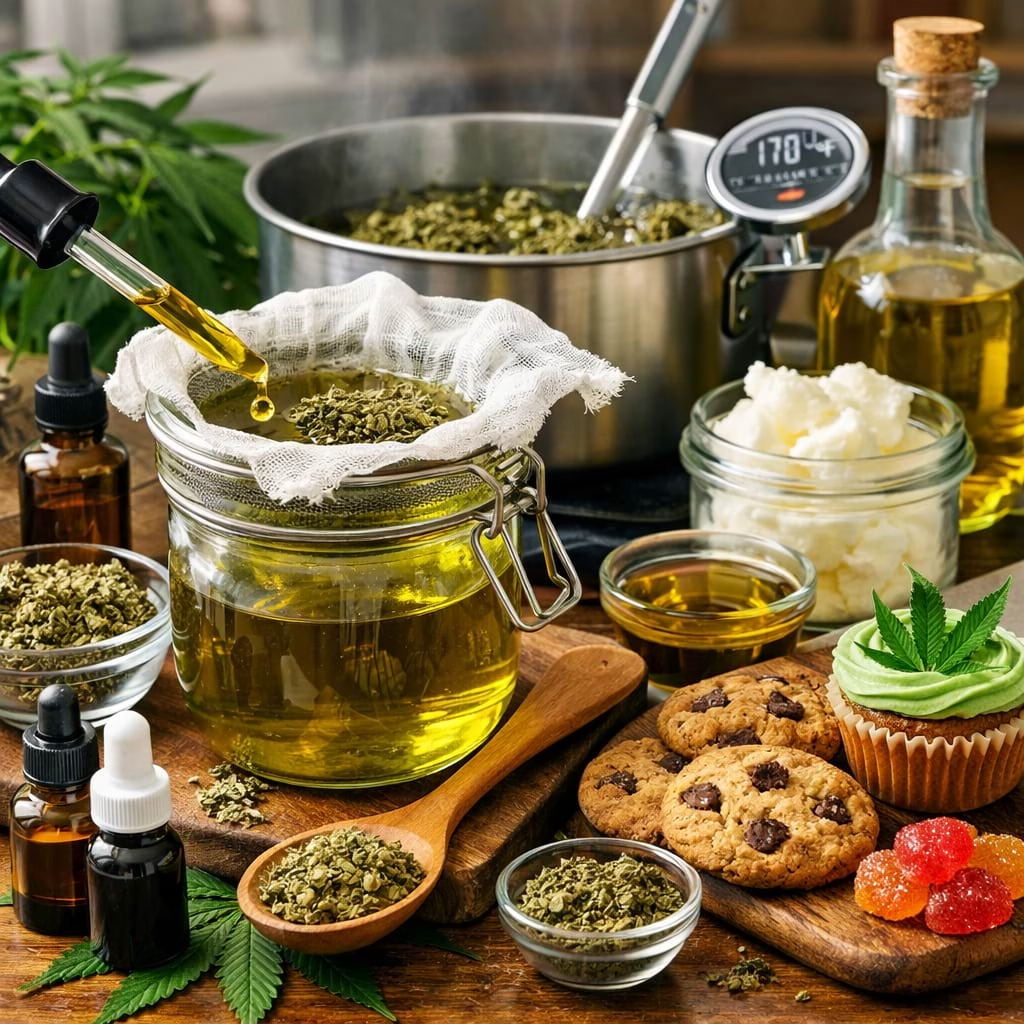
How to Make Cannaoil at Home
Making cannabis oil at home is a relatively straightforward process that requires minimal equipment. Always ensure you are working in a well-ventilated area, as heating cannabis can produce a strong, distinct odor.
Step 1: Decarboxylate the Cannabis
Preheat your oven to 240°F (115°C). Break your cannabis flowers into smaller pieces using a hand grinder or your fingers, but do not grind them into a fine powder.
Spread the broken buds evenly on a parchment-lined baking sheet. Bake for roughly 30 to 40 minutes, checking occasionally. The cannabis should look lightly toasted and smell fragrant when done.
Step 2: Combine Oil and Cannabis
In a saucepan, slow cooker, or double boiler, combine your decarboxylated cannabis with your chosen carrier oil. A standard starting ratio is one cup of oil for every 7 to 10 grams of cannabis, depending on your desired potency.
Step 3: Heat and Infuse
Heat the mixture on a very low setting. The oil temperature should stay between 160°F and 200°F (71°C – 93°C). Never allow the oil to boil, as excessive heat will destroy the delicate cannabinoids and terpenes.
Simmer the mixture gently for 2 to 3 hours. Stir occasionally to ensure the plant material doesn’t stick or burn.
Step 4: Strain the Mixture
Remove the oil from the heat and allow it to cool slightly so it is safe to handle. Line a fine mesh strainer or funnel with cheesecloth and place it over a clean glass jar.
Carefully pour the oil mixture through the cheesecloth. Allow the oil to drip naturally. Avoid squeezing the cheesecloth too hard. Doing so pushes bitter chlorophyll and plant material into your finished oil.
By following these steps, you can make safe, effective cannaoil at home. With careful heating and proper straining, you’ll create a smooth, consistent product you can trust.
How Can You Accurately Dose Homemade Cannabis Edibles?
One of the biggest challenges with homemade edibles is determining the exact potency. Unlike products purchased at a licensed dispensary, homemade cannaoil does not come with a lab-tested label. As a result, it does not provide exact details about the milligrams of THC per serving. The potency of your oil will depend heavily on the starting strength of your raw flower and how long you infused it.
You can predict your dose using our edible dosage calculator.
Because of this variability, the guiding principle for medical cannabis is to initiate treatment with a conservative dose and make gradual adjustments. When trying a new batch of cannaoil, start with a very small dose, such as a quarter teaspoon.
Wait at least two full hours before consuming more. Because the liver processes edibles slowly, it can take 1.5-3 hours for you to experience the peak effects.
Consuming a second dose too quickly is the most common reason patients experience uncomfortable, overwhelming side effects. Once you understand the strength of your batch, you can confidently use it in recipes or as a direct sublingual drop.
For safe, effective, and personalized cannabis treatment, consult a licensed medical marijuana doctor. Expert guidance ensures accurate dosing and the best possible therapeutic outcomes.
How to Store Your Cannabis Oil for Maximum Freshness?
Proper storage is essential to maintain the potency and extend the shelf life of your cannaoil. Cannabinoids degrade when exposed to heat, light, and oxygen. To protect your medicine, store your infused oil in an airtight, dark-colored glass container, such as an amber mason jar.
Keep the jar in a cool, dark place, such as a pantry or cupboard, away from the stove. If you used olive oil, it should stay fresh in the pantry for several months.
If you used coconut oil, you can extend its shelf life even further by storing it in the refrigerator. Just keep in mind that coconut oil hardens when cold. You may need to let it sit at room temperature for a few minutes before using it.
Legal Considerations for Cannabis in the USA
Learning how to make and use cannaoil can be an exciting process. However, it is essential to remember that cannabis laws vary significantly across the United States. Medical marijuana is legal in some states, enabling registered patients to buy flower and safely make their own infused oils.
In other states, only low-THC CBD products are permitted, or cannabis remains strictly prohibited altogether. To ensure you’re always operating safely and legally, it’s vital to stay updated on your local and state requirements. Discover the current legal status of cannabis in your area by visiting our comprehensive state laws page today.
Medical marijuana programs have specific guidelines on how much flower a patient can possess at one time. Staying informed protects you legally and ensures you can continue your health journey without interruption.
Conclusion
Cannaoil can be a simple, smoke-free way to support your wellness. But before you start infusing, make sure you have legal access to cannabis in your state.
If medical marijuana is your only legal option, you will need a valid medical marijuana card to purchase flower for your oil. Even in recreational states, adult-use possession limits may restrict how much you can buy at one time. Medical patients often have higher limits, which can make preparing cannaoil more practical and consistent.
If you’re serious about making cannaoil part of your routine, the first step is getting legal cannabis. That usually starts with a medical marijuana evaluation. Once certified, you can purchase cannabis confidently and create your oil without second-guessing the rules.
Key Takeaways
- Cannaoil is a versatile, infused cooking oil that allows patients to consume cannabis without smoking or vaping.
- Saturated fats are necessary for cannabinoid absorption; coconut oil and olive oil are the best carrier choices.
- You must always decarboxylate your raw cannabis in the oven before infusing it into oil to activate the therapeutic compounds.
- Edibles made from cannaoil take longer to take effect but provide longer-lasting symptom relief compared to inhalation.
- Always start with a very small dose of homemade cannaoil and wait at least two hours to gauge the effects safely.
- Keep your finished oil in a dark, airtight glass container in a cool place to preserve its potency and freshness.
Frequently Asked Questions
Below are answers to common questions about making cannabis oil.
Can I use CBD flower instead of THC flower for making cannaoil?
Yes. CBD-rich hemp or cannabis flower can be infused using the same method as THC flower. Many people choose CBD oil for its potential benefits for pain, inflammation, and anxiety, without the psychoactive effects of THC.
How long does it take before cannaoil starts to kick in?
When eaten, effects usually begin within 45 minutes to 2 hours due to digestion. When taken under the tongue, effects may appear faster, often within 30 to 45 minutes.
Does cannaoil smell when you make it?
Yes, cannabis odor is noticeable, especially during oven heating. The smell is milder during infusion, and good ventilation can help reduce lingering scents.
Can I make cannabis oil using a slow cooker?
Yes. A slow cooker provides gentle, steady heat, making it ideal for slow infusion without degrading cannabinoids. Set it to low or warm and infuse for several hours.
Disclaimer: This information is meant for educational purposes only and should not be taken as medical or legal advice. Always consult a healthcare professional before using cannabis products. Because homemade oils can vary in strength, start with a small amount and wait to see how it affects you before taking more. Be sure to follow your local laws and store all products safely away from children and pets.
Get Your Medical Marijuana Card
Same-day appointments available for online medical marijuana evaluation.
Get your certification now!