
What Is CBDA? How It Differs from CBD, THC, and THCA
Written by QuickMedCards. Updated March 6, 2026
You’ve seen CBD. You’ve heard of THC. Maybe you’ve even spotted THCA on a label.
However, there’s another compound hiding in plain sight. It’s called CBDA, and most people overlook it.
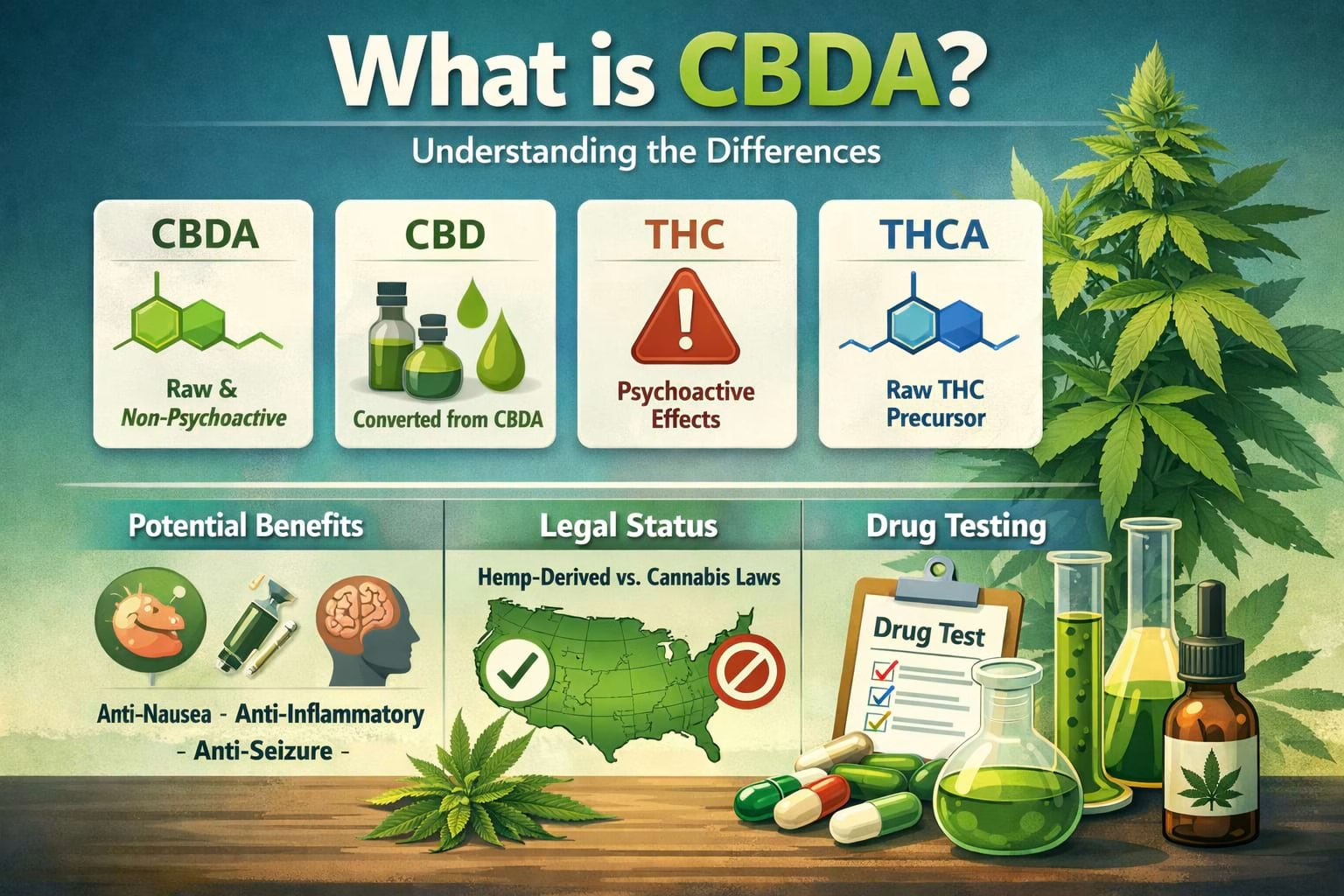
So, what is CBDA? It’s the raw, natural form of CBD. It exists in the plant before any heat is applied. And it behaves differently from the cannabinoids you are already familiar with.
If you understand how CBDA compares to CBD, THC, and THCA, you can make smarter choices. That matters whether you’re buying hemp products or considering medical marijuana treatment.
By the end of this page, you will have the answers to these questions:
- What is CBDA?
- What is the difference between CBDA and CBD?
- How does CBDA differ from THC?
- How are the two acidic cannabinoids, CBDA and THCA, different?
- What does early research say about CBDA’s potential benefits?
- Does CBDA show up on a drug test?
- Should you consider a medical marijuana card?
Looking for a Medical Marijuana Doctor?
What Is CBDA?
CBDA stands for cannabidiolic acid. It is the “raw” version of CBD.
In CBD-dominant hemp plants, CBDA is the primary cannabinoid present during growth. You won’t find much CBD in the plant while it’s growing. Instead, CBD only shows up after you apply heat. This process is called decarboxylation.
The Decarboxylation Process
When you smoke, vape, or bake cannabis, heat removes a carboxyl group (COOH) from CBDA, converting it into CBD. This chemical change is what makes CBD available in the concentrations typically found in oils, capsules, and edibles.
Predictable Kinetics: Research confirms that decarboxylation follows specific chemical kinetics, where temperature and time determine the extent of the conversion.
Time vs. Temperature: At room temperature, this conversion happens very slowly over months or years. In contrast, at cooking temperatures, the process takes only minutes.
If you’re looking for the highest concentrations of CBDA, you need to go straight to the source. You’ll find the most potency in raw, unheated hemp and cannabis flowers. To keep it that way, stick to cold-pressed juices or raw extracts that skip the heat and preserve the compound before it changes.
What Is the Difference Between CBDA and CBD?
CBDA and CBD are closely related, though CBDA contains an extra carboxyl group that is removed during heating to create CBD. This tiny change completely shifts how they interact with your body.
How CBD Works
CBD acts as a modulator that indirectly influences receptors rather than binding to them directly. Instead of ‘locking in’ to your CB1 and CB2 receptors, it nudges them to work more efficiently. It also interacts with serotonin receptors and various ion channels.
How CBDA Works
CBDA is more direct. Animal studies suggest it may reduce nausea and vomiting. It does this by boosting activity at your 5-HT1A serotonin receptors. Interestingly, you might need a much smaller dose of CBDA than CBD to settle your stomach.
In laboratory studies, CBDA has demonstrated anti-inflammatory activity by selectively inhibiting the COX-2 enzyme, which plays a role in inflammation. It may have little to no effect on COX-1, an enzyme that helps protect the stomach lining. Some in vitro research suggests CBDA may inhibit COX-2 more strongly than CBD. However, these findings have not yet been confirmed in large human clinical trials.
The Big Challenge
If CBDA is so effective, why is CBD more popular? It comes down to stability. CBDA breaks down easily when exposed to heat, light, or time. This makes it hard for companies to create consistent products. This is why CBD currently dominates the market.
While research into CBDA is promising, finding high-quality, stable products is essential. Always consult a healthcare professional before adding CBD or CBDA to your routine. A licensed provider can help determine the right approach for your needs and guide you through the medical cannabis evaluation process.
How Does CBDA Differ from THC?
THC, or delta-9-tetrahydrocannabinol, is the primary compound responsible for the “high” associated with cannabis. It produces these psychoactive effects by binding directly and strongly to CB1 receptors in the brain.
In contrast, CBDA (cannabidiolic acid) does not produce a high. Because it does not bind to CB1 receptors in the same manner as THC, there is no evidence that CBDA causes intoxication. In terms of psychoactivity (or the lack thereof), CBDA is much more similar to CBD than to THC.
Safety and Impairment
Not all cannabinoids affect your body the same way. Here’s how THC and CBDA stack up when it comes to daily functioning and safety:
- THC: Research from the National Institute on Drug Abuse (NIDA) confirms that THC impairs driving ability and cognitive function.
- CBDA: Currently, there is no evidence suggesting CBDA causes impairment, though human research remains limited.
Regulatory Landscapes
The legality of cannabinoids depends on the compound and the source plant. Here’s how THC and CBDA are regulated:
- THC: Under federal law, THC remains a Schedule I controlled substance, although many states have legalized it for medical or recreational use. It is essential to review specific state cannabis laws to understand the regulations in your area.
- CBDA: Like CBD, CBDA is typically derived from hemp. It is not a scheduled substance under federal law, provided it is sourced from compliant hemp plants. However, the specific regulatory framework for CBDA continues to evolve as research expands.
How Are the Two Acidic Cannabinoids, CBDA and THCA, Different?
THCA is the raw, acidic version of THC. Similarly, CBDA is the precursor to CBD. Both of these exist in the cannabis plant before you apply heat. While they share similar origins, they affect your body in very different ways.
How They Affect Your Body
Even though they come from the same plant, THCA and CBDA do very different things in your body. Here is a simple breakdown:
- The “High” Factor: THCA will not get you high in its raw form. It cannot easily cross the blood-brain barrier or bind to your brain’s receptors the way THC does.
- Brain Protection: Research suggests that THCA can help reduce inflammation. It may also protect your brain cells by activating a specific receptor called PPARγ.
- Nausea and Inflammation: CBDA is mostly studied for its ability to fight nausea and reduce swelling. It interacts with your body through an entirely different set of receptors than THCA.
The Legal Side of Cannabinoids
There is one major legal difference you should know. When you heat THCA, it converts directly into THC. This matters a lot for hemp laws and compliance.
The USDA uses the following “Total THC” formula to decide if a crop is legal:
Total THC = (THCA x 0.877) + Delta-9 THC
This formula accounts for the potential conversion of THCA into THC, which occurs naturally over time or rapidly when the product is heated or smoked. Because THCA turns into THC, a plant with high THCA levels might fail a legal test. CBDA is different because it only converts to CBD. It never becomes THC, so it doesn’t affect these legal calculations.
What This Means for You
If you are a consumer, pay close attention to product labels. A product high in CBDA won’t push you over a THC limit. However, a product high in THCA definitely could. Understanding this distinction helps you stay within legal boundaries and choose the right product for your needs.
What Does Early Research Say About CBDA?
Research on CBDA is still in the early stages, with most studies conducted in animals or cell cultures. Researchers have not yet completed any large-scale human clinical trials. That said, the early findings are promising enough to warrant further investigation.
Anti-nausea: The strongest evidence for CBDA comes from studies on nausea. Studies in rats show CBDA reduces nausea-induced behavior through 5-HT1A receptor activation. The 5-HT1A receptor is the same pathway targeted by some anti-nausea medications.
Anti-inflammatory: As discussed earlier, lab tests on human enzymes demonstrate that CBDA specifically targets and blocks the inflammation-causing COX-2 enzyme.
Anticonvulsant: One study found that CBDA enhanced CBD’s anticonvulsant activity in a rat seizure model, suggesting a possible entourage effect where the compounds work better together.
Just remember that researchers haven’t confirmed any of these findings in large human trials yet. Moreover, CBDA is not FDA-approved to treat any condition. So, patients should not use CBDA as a substitute for prescribed medications without speaking to a doctor.
Does CBDA Show Up on a Drug Test?
Most standard drug tests look for THC metabolites. They do not test for CBDA or CBD. Therefore, pure CBDA is unlikely to cause a positive result.
However, there’s a catch. Some hemp products contain small amounts of THC along with CBDA. If you use large amounts of a full-spectrum CBD product, THC can build up in your system. In some cases, that could trigger a positive result. To minimize this risk, consumers should opt for broad-spectrum or isolate formulations and verify ‘non-detectable’ THC levels through third-party lab reports, or Certificate of Analysis (COAs).
If drug testing is a concern, talk to a medical marijuana doctor before starting any cannabis product. It’s also important to know that some states provide employment protections for registered medical marijuana patients. If you ever find yourself in that situation, knowing what steps to take after failing a drug test can make a real difference. To learn more, see our comprehensive overview of medical marijuana card benefits.
States that offer employment protections for medical marijuana cardholders include:
- Arizona
- Arkansas
- Connecticut
- Delaware
- Illinois
- Maine
- Minnesota
- Missouri
- Montana
- Nevada
- New Jersey
- New York
- Oklahoma
- Rhode Island
- West Virginia
Remember that employment protections vary by state. Some prohibit discrimination based solely on medical marijuana status, while others include specific limitations or employer exceptions.
Be sure to review your state’s medical marijuana laws carefully to understand how these protections apply to your situation.
Should You Consider a Medical Marijuana Card?
CBDA is naturally found in raw hemp and is available without a prescription in most states. But if you want access to a wider range of cannabinoid therapies, including higher-potency products or formulations with THC, a medical marijuana card can give you more options.
A medical marijuana card also offers legal protections, potential tax savings on purchases in certain states, and access to products you won’t find in standard hemp stores.
Curious if medical cannabis is right for you? Learn how to get a medical marijuana card and start exploring the benefits today by speaking with a licensed cannabis physician.
Conclusion
The study of CBDA proves that cannabinoids don’t always need heat to be biologically active. By staying in its “raw” state, it offers powerful anti-inflammatory and anti-nausea benefits without any psychoactive high. It is a sophisticated way to support your wellness routine while staying fully grounded.
Navigating cannabinoids and legalities can be overwhelming, but a licensed doctor can simplify the process. A medical marijuana card provides the legal protection and professional oversight needed for a safe, effective path to wellness. Beyond just access, the benefits of a medical marijuana card include significant tax savings, higher potency limits, and personalized guidance that recreational products don’t offer.
Key Takeaways
- CBDA is the raw, acidic precursor to CBD. It converts to CBD when heated.
- CBDA does not produce a high and has a different receptor profile than THC.
- THCA is the acidic precursor to THC. It converts to THC when heated, which affects hemp compliance testing.
- Early research suggests CBDA may have anti-nausea, anti-inflammatory, and anticonvulsant properties, but human trials are limited.
- CBDA does not affect total THC calculations the way THCA does.
- If you want access to a broader range of cannabis therapies, a medical marijuana card may be worth exploring.
Frequently Asked Questions
Below are answers to common questions regarding the differences between CBDA and CBD.
Is CBDA the same as CBD?
No. CBDA is the raw, unheated form of CBD. While they are closely related, they have different molecular structures and interact with the body differently. CBDA converts to CBD when heat removes a carboxyl group through a process called decarboxylation.
Does CBDA get you high?
No. CBDA does not bind to CB1 receptors the way THC does and has no known psychoactive effects.
Is CBDA legal?
Yes, as long as it’s derived from hemp. Under U.S. federal law, hemp products are legal provided they contain less than 0.3% Delta-9 THC. However, state laws vary. Check your specific state’s cannabis laws for details.
Can CBDA cause a failed drug test?
CBDA itself is not what drug tests screen for. However, full-spectrum hemp products may contain trace THC. This could accumulate with heavy use. If drug testing is a concern, consult a doctor before using any hemp product.
Where can I find CBDA products?
CBDA is heat-sensitive and naturally converts to CBD; it’s less common than regular CBD. Your best sources include cold-pressed hemp juices, raw extracts, and tinctures. These are formulated to ensure the integrity of the compound.
Should I talk to a doctor before trying CBDA?
Yes, especially if you take medications or have a health condition. A cannabis-trained physician can help you understand your options. Book an appointment with a licensed provider through Quick Med Cards.
Disclaimer: This article is for informational purposes only. It is not a substitute for professional medical advice. Consult a licensed healthcare provider before starting any new supplement or cannabis product.
Get Your Medical Marijuana Card
Same-day appointments available for online medical marijuana evaluation.
Get your certification now!