
Does HHC Show Up on a Drug Test?
Written by QuickMedCards. Updated March 24, 2026
What is HHC | Drug Tests | Detection | Duration | Hemp-Derived | HHC vs Delta-8 | Medical Card | Conclusion | Key Takeaways | FAQs
HHC (hexahydrocannabinol) is a popular semi-synthetic cannabinoid sold legally in many states.
While many users view it as a legal alternative to Delta-9 THC, there is a significant catch. HHC can trigger a positive result on standard drug tests.
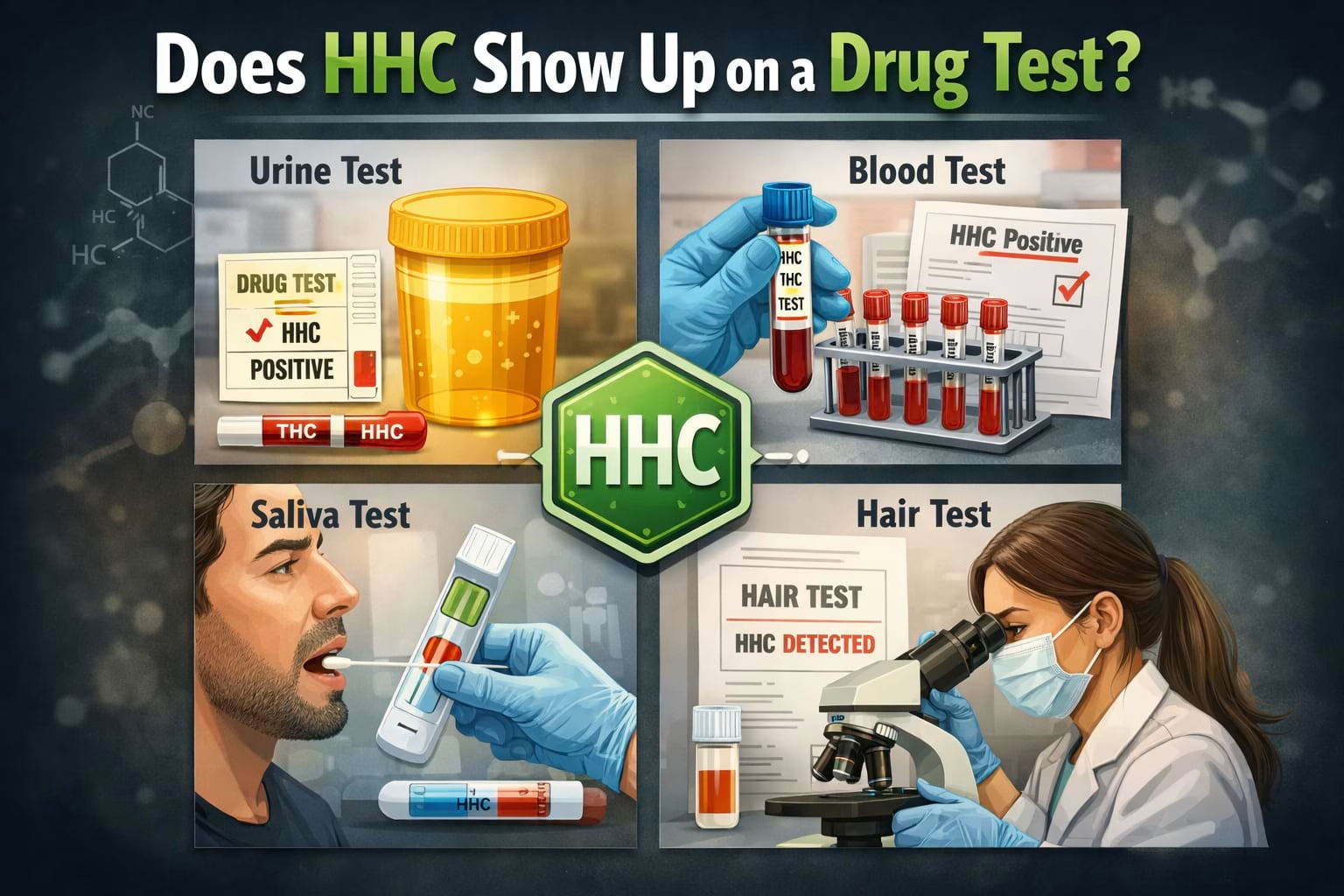
This guide explains how HHC interacts with urine, saliva, blood, and hair screens.
We will look at the latest scientific research and discuss what you can do to protect your employment or legal standing.
By the end of this page, you will have the answers to these questions:
- What is HHC?
- Does HHC show up on a standard drug test?
- How do drug tests detect cannabinoids?
- How long does HHC stay in your system?
- Does “hemp-derived” mean it won’t show up?
- How is HHC different from Delta-8 THC on drug tests?
- Can a medical marijuana card help?
Looking for a Medical Marijuana Doctor?
What is HHC?
HHC stands for hexahydrocannabinol. It is a cannabinoid created through hydrogenation, which adds hydrogen molecules to THC or CBD. HHC occurs naturally in tiny amounts in cannabis seeds and pollen. Almost all commercial HHC is created in a laboratory.
Manufacturers derive HHC from hemp. It typically contains less than 0.3% Delta-9 THC. Because of this, many sellers market it as a federally legal option under the 2018 Farm Bill.
To understand the testing risk, consider these facts about how HHC interacts with the body:
- Psychoactive Impact: HHC produces effects that are very similar to Delta-9 THC.
- Biological Interaction: It binds to the same CB1 receptors in the brain as traditional cannabis, creating a “high” that users report is comparable to standard marijuana.
- The Testing Problem: This similarity in chemical structure is exactly why HHC creates significant complications during drug screenings.
For a full overview of how state cannabis laws affect your rights, you can check our dedicated state cannabis laws page.
Does HHC Show Up on a Drug Test?
Yes, HHC will likely cause you to fail a standard drug test. Most workplace or court-ordered tests use immunoassay technology. These screens look for a broad class of cannabinoid metabolites rather than specific compounds.
They do not look for Delta-9 THC specifically. Instead, they look for the shape of compounds the body produces after consuming THC.
Why HHC Triggers a Positive Result
When your body breaks down HHC, it creates a byproduct called HHC-COOH. This metabolite is structurally almost identical to THC-COOH, which is the primary marker labs use to detect marijuana use.
This “cross-reactivity” means the test chemicals often mistake HHC for THC. You should assume that HHC will cause you to fail a standard urine drug test.
The risk isn’t just theoretical. After HHC’s introduction to Sweden, researchers observed a dramatic shift in drug testing data in the spring of 2023:
- Increased Positives: Positive rates for cannabis screenings jumped from 2 percent to over 10 percent in a short period.
- Mismatched Results: Many individuals tested positive for THC on the initial screen. However, follow-up tests proved they had not used traditional cannabis.
- The Culprit: Lab analysis confirmed that HHC metabolites were responsible for triggering these hits on standard urine tests.
Sophisticated lab equipment can technically distinguish between HHC and THC. However, most employer-level screenings are not that nuanced. If your career or legal status depends on a clean result, the safest choice is to avoid HHC entirely.
If you have questions about cannabinoid use or drug testing, a licensed healthcare provider can help. They can explain your state’s medical cannabis options and the benefits of a medical marijuana card. They’ll also guide you in making informed decisions.
Schedule a consultation with a certified provider today.
How Drug Tests Detect Cannabinoids
If you use HHC (Hexahydrocannabinol), you will almost certainly fail the initial round of a standard drug test. This is because HHC is structurally similar to Delta-9 THC. While the first screening usually triggers a “positive” result, your outcome depends entirely on the specific equipment the lab uses to double-check their findings.
How Immunoassay Screening Works
The initial phase of a drug test relies on a broad-spectrum analysis to identify any cannabinoid-like structures.
This process is known as an immunoassay screen, and it functions based on several key factors, for instance:
- Antibody Reaction: These tests use antibodies designed to bind to cannabinoid metabolites.
- Cross-Reactivity: These antibodies are not specific to Delta-9 THC and can also respond to compounds like HHC, as shown in cannabinoid analogs
- Low Thresholds: You do not need a large amount of HHC in your system to trigger a flag. Even standard doses can set off common tests like the Emit or CEDIA screens
Confirmatory Testing: The Deciding Factor
If your initial screen comes back positive, the lab performs a confirmatory test. This step is a highly precise analysis that identifies the exact molecules in your system.
This stage is where HHC results vary based on the specific equipment used:
1. GC-MS (Gas Chromatography-Mass Spectrometry)
This device is the most common backup equipment. Most GC-MS protocols are programmed specifically to discover traditional THC metabolites. According to this study, HHC produces a unique chemical signature that standard equipment may not recognize, which often leads to an overturned “confirmed negative” result.
2. LC-MS/MS (Liquid Chromatography with Tandem Mass Spectrometry)
This version is a more advanced testing method. If a lab uses LC-MS/MS and specifically updates its software to look for HHC, they will identify it. Research using real urine samples has proven that this equipment easily identifies HHC traces that the initial screen flagged.
Federal Cutoff Levels and Regulations
It is important to understand the specific limits used by testing facilities. For federal employees and those in safety-sensitive positions, the Department of Transportation (DOT) sets strict guidelines under 49 CFR 40.85.
- Screening Cutoff: 50 ng/mL. If the concentration of metabolites is below this, the test is negative.
- Confirmatory Cutoff: 15 ng/mL. If the initial screen is positive, the lab uses this lower, more sensitive threshold to confirm the presence of THC.
While these are federal standards, private employers have the freedom to use different cutoffs or more advanced testing panels that specifically include HHC.
How Long Does HHC Stay in Your System?
If you are curious about how long HHC (hexahydrocannabinol) remains in your body, the answer depends on several factors. Because HHC is structurally similar to THC, it is fat-soluble. This means it stores itself in your fatty tissues and releases slowly over time.
While research is still evolving, a 2025 pharmacokinetic study has helped determine likely detection windows based on how the body processes these cannabinoids.
Factors That Influence Detection
Several variables affect how quickly your body clears HHC. These include:
- Frequency of use: Using HHC daily leads to accumulation in the body, which extends the detection time.
- Metabolism and BMI: Since HHC is stored in fat, individuals with higher body fat percentages may retain it longer. Similarly, metabolic rates can delay the clearing process.
- Method of consumption: Whether you inhale HHC or take it orally can change how fast it enters and leaves your bloodstream.
- Hydration and health: Your overall physical health and hydration levels play a minor role in how efficiently your kidneys and liver process metabolites.
HHC Detection Windows by Test Type
The type of drug test used is the most significant factor in determining if HHC will show up. Different tests look for either the compound itself or the metabolites your body creates.
| Test Type | Detection Window (Occasional Use) | Detection Window (Regular Use) |
|---|---|---|
| Urine | 3 to 7 Days | 30+ Days |
| Saliva | 24 to 48 Hours | Up to 72 Hours |
| Blood | Up to 48 Hours | Up to 48 Hours |
| Hair | Up to 90 Days | Up to 90 Days |
HHC detection windows vary depending on the type of drug test used:
- Urine Tests: These primarily look for metabolites. For occasional users, HHC may be detectable for three to seven days. If you use HHC regularly, it could stay in your system for 30 days or longer.
- Saliva Tests: These tests detect the actual HHC compound rather than its metabolites. HHC is generally detectable in oral fluid for 24 to 48 hours after use.
- Blood Tests: These have a very short detection window. HHC is typically found in blood samples for up to 48 hours.
- Hair Follicle Tests: These provide the longest look back. A standard hair follicle test covers a 90-day window. Despite the limited data on specific HHC, it likely follows the same 90-day pattern as other cannabinoids.
HHC mirrors the metabolic behavior of THC. If you have an upcoming screening, it is essential to keep these timelines in mind. The safest course of action is to give your body enough time to naturally eliminate the substance because everyone has a different metabolism.
Does “Hemp-Derived” Mean It Won’t Show Up?
No. Hemp-derived does not mean drug-test safe. Drug tests do not check the source of the cannabinoid. They only look for specific chemical markers.
Many people assume “legal” means “undetectable,” but this is a dangerous mistake for three specific reasons:
- Tests Detect Metabolites, Not Plants: Drug screens do not look for hemp or marijuana. They look for metabolites, which are the chemical byproducts created when your liver breaks down HHC.
- HHC Mimics THC: Because HHC is a hydrogenated form of THC, your body produces metabolites that are structurally almost identical to traditional marijuana.
- Antibody Confusion: The antibodies in a standard urine test cannot tell the difference between “legal” HHC metabolites and “illegal” THC metabolites. They will bind to both, triggering a positive result.
A positive drug test result carries the same weight regardless of whether the product was bought at a gas station or a dispensary. A “legal” hemp label will not protect your employment, probation status, or professional license if those metabolites are found in your system.
How to Protect Yourself
If you rely on cannabinoids for health and wellness, a medical marijuana card is your best line of defense. It provides a formal medical record that can offer legal and professional protections that “hemp-derived” labels cannot.
A certified provider can guide you safely. Learn more in our guide to the best online medical marijuana card services.
HHC vs. Delta-8 THC on Drug Tests
HHC and Delta-8 THC are both semi-synthetic cannabinoids that behave similarly on drug tests. Both produce metabolites that cross-react with standard THC immunoassays. Preanalytical stability research confirmed that carboxy-HHC, like Delta-8 THC metabolites, is detectable in urine using standard cannabinoid immunoassay platforms.
If you are considering Delta-8 products, read our guide on buying Delta-8 online and our overview of full-spectrum Delta-8 vapes for more context on how these products compare.
Can a Medical Marijuana Card Help?
Many people believe a medical marijuana card acts as a “shield” during a drug test. It is important to understand that a card does not stop you from testing positive, but it does change the legal context of that result.
Having a valid medical marijuana card can provide several advantages in professional settings:
- Legal Standing: A medical card provides legal standing to use cannabis under your specific state laws. This is important for staying compliant with local regulations.
- Employment Protection: Some states have laws that prohibit employers from discriminating against registered medical marijuana patients. In these areas, a positive test might not lead to termination if you have valid documentation. States with such protections include Arizona, Connecticut, and Pennsylvania.
- Varying State Laws: It is vital to check your local statutes. Some states offer no protection for employees, even if they are legal patients. Employers in safety-sensitive industries or those with federal contracts may still enforce strict drug-free policies.
Talk to one of our certified cannabis doctors to learn if a medical marijuana card is right for you and how it may fit your wellness plan.
Conclusion
HHC may seem like a safer option because it is often sold as legal, but when it comes to drug testing, the risk is real.
If cannabis is part of your health or therapeutic plan, it is better to work with the right medical professional, because all marijuana doctors are doctors, but not all doctors are marijuana doctors.
At Quick Med Cards, we make the medical marijuana card process simple, fast, and affordable. Our licensed providers evaluate your eligibility and guide you through each step, ensuring you have clear, professional support.
More importantly, we go beyond certification with a care-first approach that helps patients get the most from their treatment even after they have received their medical card.
Key Takeaways
- HHC can trigger a positive result on standard cannabinoid screening tests, especially urine immunoassays.
- Some THC-focused confirmation methods may miss HHC, while LC-MS/MS panels that include HHC markers can detect it.
- Urine carries the clearest HHC drug-test risk. Saliva and blood are more recent-use matrices, and HHC-specific hair data are still limited.
- “Hemp-derived” does not mean drug-test safe.
- A medical marijuana card does not prevent a positive test and may not protect you in federal or safety-sensitive settings.
Frequently Asked Questions
Below are answers to common questions regarding HHC and drug testing.
Will HHC make me fail a drug test?
Yes, it can. HHC is metabolized into compounds similar to THC metabolites. These can cross-react with antibodies used in standard urine drug tests, which may result in a positive test.
How long does HHC stay in urine?
HHC metabolites are typically detectable in urine for 3 to 7 days after occasional use. For frequent users, detection can extend to 30 days or longer, depending on factors like metabolism and body fat.
Does HHC show up on a mouth swab test?
Yes, HHC can be detected in oral fluid. Saliva tests typically detect parent compounds for 24 to 48 hours after use.
Can I dispute a positive HHC result?
You may be able to request a confirmatory LC-MS/MS test that specifically targets HHC metabolites rather than THC-COOH. Whether this is accepted depends on the testing program and employer policy.
Is HHC legal?
HHC occupies a legal gray area. It is derived from hemp and is not explicitly scheduled under federal law, but some states have banned it. Check our state cannabis laws page for the latest information in your state.
Disclaimer: This article is for informational purposes only and does not constitute legal or medical advice. Consult a qualified professional for guidance specific to your situation.
Get Your Medical Marijuana Card
Same-day appointments available for online medical marijuana evaluation.
Get your certification now!