
How Does Online Medical Marijuana Certification Work?
Written By QuickMedCards. Updated February 11, 2026
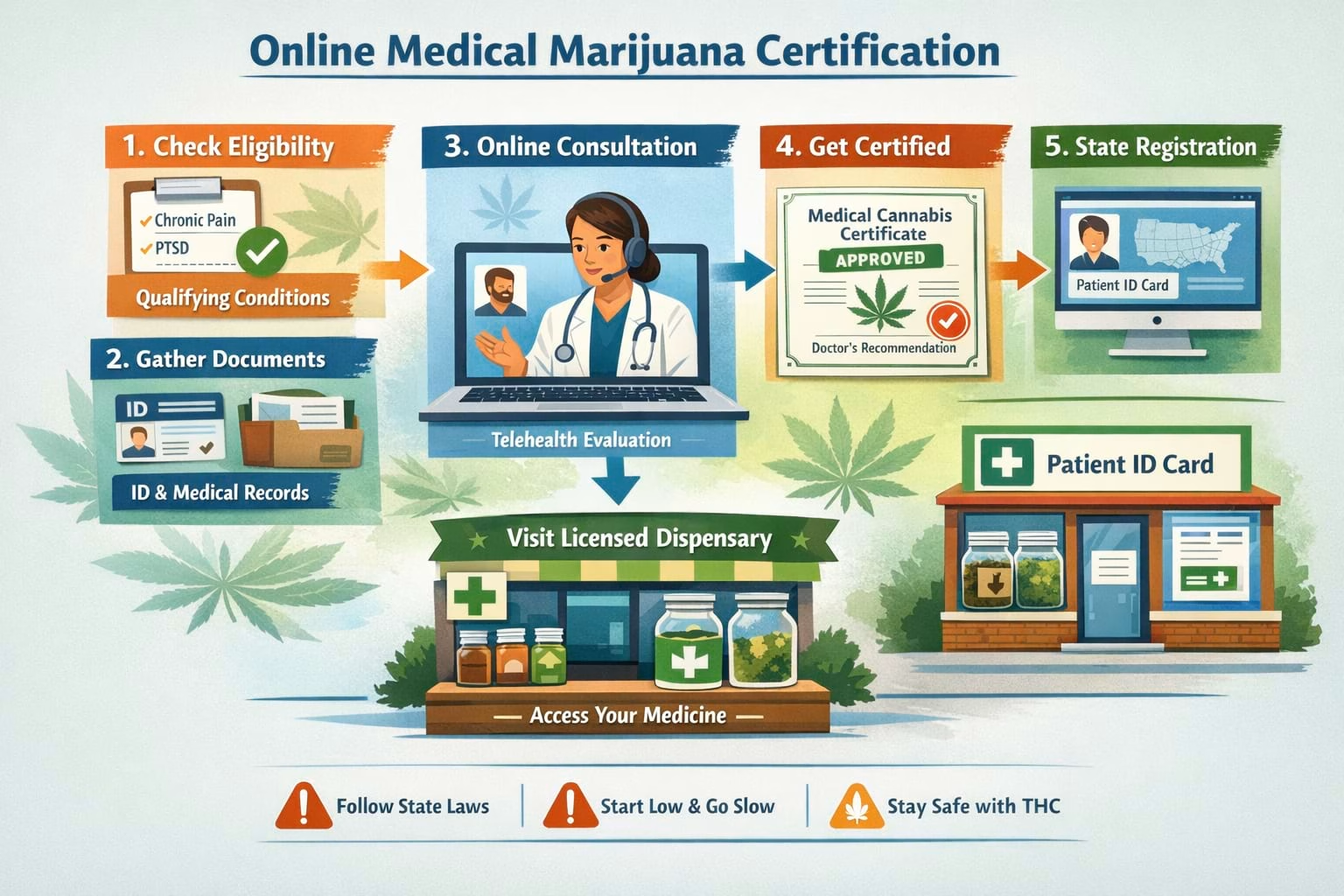
With an online medical marijuana certification, you can complete a medical cannabis evaluation from home using telehealth. Instead of driving to a clinic, you meet with a licensed provider by video or phone, discuss your symptoms and medical history, and, if appropriate under your state’s rules, receive a medical cannabis recommendation or certification.
From there, many states require you to register with a state program to obtain a patient ID card, while others allow dispensary access with the provider’s certification alone.
This article breaks down the real-world steps, highlights the documents you’ll need, what happens during the appointment, how approval works, and how to stay safe with THC-containing products.
By the end of this page, you will have the answers to these questions:
- What does “online certification” mean in the U.S.?
- How does an online medical marijuana certification work?
- How do online certification details vary by state?
- What to expect during an online medical marijuana certification appointment?
- What are the benefits and limits of THC?
- What patients should know before using THC?
- How to use cannabis safely according to doctors?
- How do state medical marijuana programs differ in costs, timelines, and renewals?
- What are the common mistakes that patients make?
Looking for a Medical Marijuana Doctor?
What Does “Online Certification” Mean in the U.S.?
Online certification usually refers to the medical visit, not the entire legal process. In most states, medical cannabis access has two parts:
- A clinical decision: A licensed physician (or other authorized clinician, depending on the state) evaluates you and decides whether medical cannabis may be appropriate for your symptoms.
- A state program step (in many states): You register with the state, pay any required fees, and receive a patient ID card or digital approval.
State rules vary widely and change. Telehealth is permitted in most medical cannabis states for initial and renewal evaluations, though some states still require in-person visits for first-time certifications. When in doubt, always confirm your state’s current requirements on an official state website.
Our cannabis laws page makes it easy to understand the current regulations in your state.
How Does an Online Medical Marijuana Certification Work?
Most online processes follow the same basic flow, even though the “paperwork” differs by state.
1. Confirm You’re Eligible in Your State
Each state has its own rules for medical cannabis, but the basic idea is usually the same. You qualify if you have a medical condition or symptom that your state recognizes.
The most common conditions that may qualify for medical cannabis include:
If your state requires a registry card, you will also need to meet residency rules and provide a valid ID.
2. Gather What You Need Before You Book
A smoother appointment usually starts with the basics:
- A government-issued photo ID
- Proof of residency (if required by your state)
- Any relevant medical records (not always required, but helpful), such as a diagnosis, medication list, imaging reports, or prior visit notes
Even if you do not have a thick stack of records, you can still be prepared by writing down:
- Your symptoms and how long you’ve had them
- The treatments you have tried so far
- The side effects or limitations you are dealing with (sleep, appetite, daily function, etc.)
3. Schedule Your Telehealth Evaluation
With Quick Med Cards, we make scheduling easy and convenient. You pick a time that works for you, fill out a few intake forms, and upload any documents if they’re needed. Then we’ll connect you with a licensed provider for your evaluation.
Take the next step now. Talk to a doctor today!
4. Attend the Visit: What the Doctor Evaluates
A medical marijuana evaluation is not a “rubber stamp.” The clinician typically reviews:
- Your current symptoms and how they affect daily life
- Relevant medical history and current medications
- Prior treatments and whether they helped
- Any risk factors (for example, a history of substance use disorder, unstable heart disease, pregnancy, or a history of psychosis)
They may also explain potential benefits, side effects, and safer-use strategies, including how THC can affect reaction time and anxiety in some people.
5. Receive the Provider Certification (if approved)
If your doctor thinks it’s a good option and you meet the state’s requirements, you will get your documentation. It usually arrives in one of these ways:
- A written certification/recommendation you can download or receive by email, or
- A direct submission into a state portal or registry system (common in states with integrated systems)
Some state programs clearly state that clinicians submit certifications electronically and that patients complete the remaining steps online. For example, Ohio outlines a registry-driven process that starts after you see a certified physician. Then you follow the email instructions to complete registration, per the state’s steps.
6. Complete State Registration Steps (if required)
To complete your state registration, you’ll typically:
- Create an account in the state portal.
- Upload ID and any required documents.
- Pay any applicable program fee.
- Receive a temporary approval or wait for a card by mail.
Michigan, for instance, provides official guidance for patients applying online and notes that the physician must certify through the state process.
7. Use Your Approval at a Licensed Dispensary
Once you’re approved, you can buy from licensed dispensaries as long as you follow your state’s rules. Some states issue physical cards, while others use a digital approval. In a few places, you may be able to shop with a provider’s certification and a valid ID.
How Do Online Certification Details Vary by State?
Even if your medical visit happens online, every state does things a little differently. That can change how long the process takes and what you need to do next.
Common Differences You Should Expect
Here’s what you should know about how online certification rules can differ by state:
- Telehealth rules: Some states allow telehealth evaluations broadly, some restrict them, and some require in-person visits for first-time patients.
- Who can certify: Some allow only physicians, while others include nurse practitioners or physician assistants.
- Registry vs. no registry: Some states require a patient card, while others use provider certifications directly.
- Validity periods: Certifications and cards expire and must be renewed on a schedule set by the state.
If you are unsure about your state’s flow, it is best to check the state website. We have listed a few state program information below:
We’ve made state cannabis laws easy to access, read, and understand, with a clear overview of each state’s regulations.
What to Expect During an Online Appointment?
Most telehealth evaluations are straightforward and patient-focused. The clinician’s job is to determine whether cannabis is reasonable for you, and to make sure you understand safety basics.
What Do Doctors Ask During Online Visits?
Doctors often ask questions like:
- What symptoms are you treating, and how severe are they?
- What diagnoses have you received, and when?
- What have you tried already (prescriptions, physical therapy, counseling, over-the-counter medications)?
- Have you used cannabis before, and how did it affect you?
- Do you have any conditions that could increase risk (heart rhythm issues, pregnancy, history of psychosis)?
Check these tips on what to say to your doctor. Being honest helps your clinician create a safer plan and avoid surprises, like a THC product that’s too strong for your tolerance.
Talk with one of our doctors to get certified today.
What Are the Benefits and Limits of THC?
Medical cannabis isn’t a cure-all, and states don’t approve it as a cure. But research suggests that products containing THC, including THC:CBD blends, may help ease specific symptoms for some people.
THC has shown potential to ease symptoms for some patients, especially chronic pain, nausea from chemotherapy, appetite loss, and MS-related spasticity, among many others. Benefits tend to be modest and vary by person, product, and dose.
Here are some of the most common reasons people turn to THC products for relief.
Chronic Pain
A lot of research suggests that cannabinoids may offer slight improvements in chronic pain and the sleep issues that often come with it, at least for some people. For example, a BMJ systematic review found that medical cannabis and cannabinoid products provided modest pain relief compared with a placebo in chronic pain studies.
The federal Agency for Healthcare Research and Quality also maintains a living evidence synthesis on cannabinoids for pain.
A “living evidence synthesis” is an ongoing review. Instead of publishing one report and stopping, the agency keeps updating the findings as new studies come out. So the information stays current over time.
Chemotherapy-Related Nausea
THC-based prescription medications such as dronabinol and nabilone have evidence for chemotherapy-induced nausea and vomiting, especially when standard antiemetics are not enough.
A quantitative review found that cannabinoids worked better than some older anti-nausea medications in several studies.
Multiple Sclerosis Spasticity
For MS-related spasticity that doesn’t improve with standard treatments, THC:CBD products may be worth discussing with your provider. Some randomized trials discovered that nabiximols, a THC:CBD mouth spray, helped reduce spasticity in certain patients. As with any medication, side effects can happen, and common ones include dizziness and fatigue.
What Are the Limitations?
Cannabis, including THC, is best thought of as symptom support for selected conditions, not a cure. Results vary by product, dose, and your individual biology. That is why it is essential to talk to a doctor. Follow-ups matter, too.
What Patients Should Know Before Using THC?
THC can be helpful, but it is still an active drug with real effects. Common side effects can include:
- Drowsiness or fatigue
- Dizziness
- Dry mouth
- Anxiety or paranoia (more likely at higher doses or in new users)
- Short-term memory and attention impairment
A well-known review in The New England Journal of Medicine outlines some clear risks of cannabis use, like impaired thinking or coordination, and the chance that some people may develop cannabis use disorder.
When it comes to longer-term or more serious harms in chronic pain patients, the evidence is often limited or of lower quality. Researchers have compiled what we know so far in a BMJ Open review.
How to Use Cannabis Safely?
To use cannabis safely, follow these important guidelines:
- Start slow with lower doses, especially with edibles.
- Avoid mixing THC with alcohol or sedating medications unless your clinician has advised you.
- Do not drive or operate machinery while impaired.
- Keep products out of reach of children and pets.
- Avoid cannabis during pregnancy and breastfeeding.
How Do State Programs Differ in Costs, Timelines, and Renewals?
Medical marijuana programs differ by state, so costs and timelines vary. Here’s an overview of what to expect:
- The telehealth appointment may be completed quickly once scheduled.
- If your state requires a registry ID card, approval can take anywhere from a short processing period to longer waits, depending on state workflow and application volume.
- Most patients will need renewals, and some states require regular follow-up visits to keep certifications active.
A common misconception is that “online certification” always means instant dispensary access. In registry states, the state step can still take time, even if your medical visit is the same day.
If you’re ready to start, our guide on how to get a medical marijuana card explains the process step by step.
What Are the Common Mistakes That Patients Make?
To ensure a smooth certification process, watch out for these common mistakes:
- Uploading an expired ID or the wrong document type
- Mismatched name or address between documents
- Skipping key medical history details during intake
- Assuming every state accepts telehealth for first-time patients
- Using unverified sources instead of checking your state program site for current rules
A good medical marijuana card service should set expectations up front, including what happens after the clinician approves you.
Key Takeaways
- Online medical marijuana certification usually refers to the telehealth evaluation, and many states still require a separate registry step for a patient ID card.
- The appointment focuses on symptoms, medical history, prior treatments, and safety risks, not just checking a box.
- Research shows THC can help with chronic pain and chemotherapy-related nausea and vomiting.
- Side effects are real, especially at higher THC doses, so dosing, product choice, and follow-up matter.
- State rules change, so always confirm your next steps through official state program guidance.
Frequently Asked Questions
Below are answers to common questions about online medical marijuana certification.
How long does an online medical marijuana evaluation take?
Many evaluations are relatively brief, but the total time depends on how much history needs to be reviewed and on your state’s requirements. The state registration step, if required, can add additional processing time.
Do I need medical records to get certified online?
Not always, but records can help, especially if your state is strict about qualifying conditions or if your case is medically complex. At a minimum, be ready to explain your diagnosis, symptoms, and prior treatments clearly.
Is an MMJ recommendation the same as a medical marijuana card?
Not necessarily. In many states, the clinician recommendation or certification is only one step, and the state issues the card after registration. Some states allow dispensary access using the certification without a separate card.
Can I use my medical marijuana certification in another state?
Usually not. Medical marijuana certifications are valid only in the state where they are issued. Some states allow limited reciprocity for out-of-state patients with valid medical cards from their home state. Because reciprocity rules vary, always confirm local state laws before attempting to use medical cannabis in another state.
What should I tell the doctor about THC if I have never used cannabis?
Tell them you are new to cannabis and want a conservative plan. Clinicians can discuss basic dosing principles, likely side effects, and how to avoid overdosing, especially with edibles.
Disclaimer: This article is for informational purposes only and does not provide medical or legal advice. Medical cannabis laws and telehealth rules vary by state and may change. Always consult a licensed health care professional for personalized guidance, and use official state program websites to confirm current requirements.
Get Your Medical Marijuana Card
Same-day appointments available for online medical marijuana evaluation.
Get your certification now!