
What Is a Marijuana Doctor?
Written by QuickMedCards. Updated February 27, 2026
Most people think getting medical cannabis is as simple as walking into a dispensary. It’s not. You need a marijuana doctor.
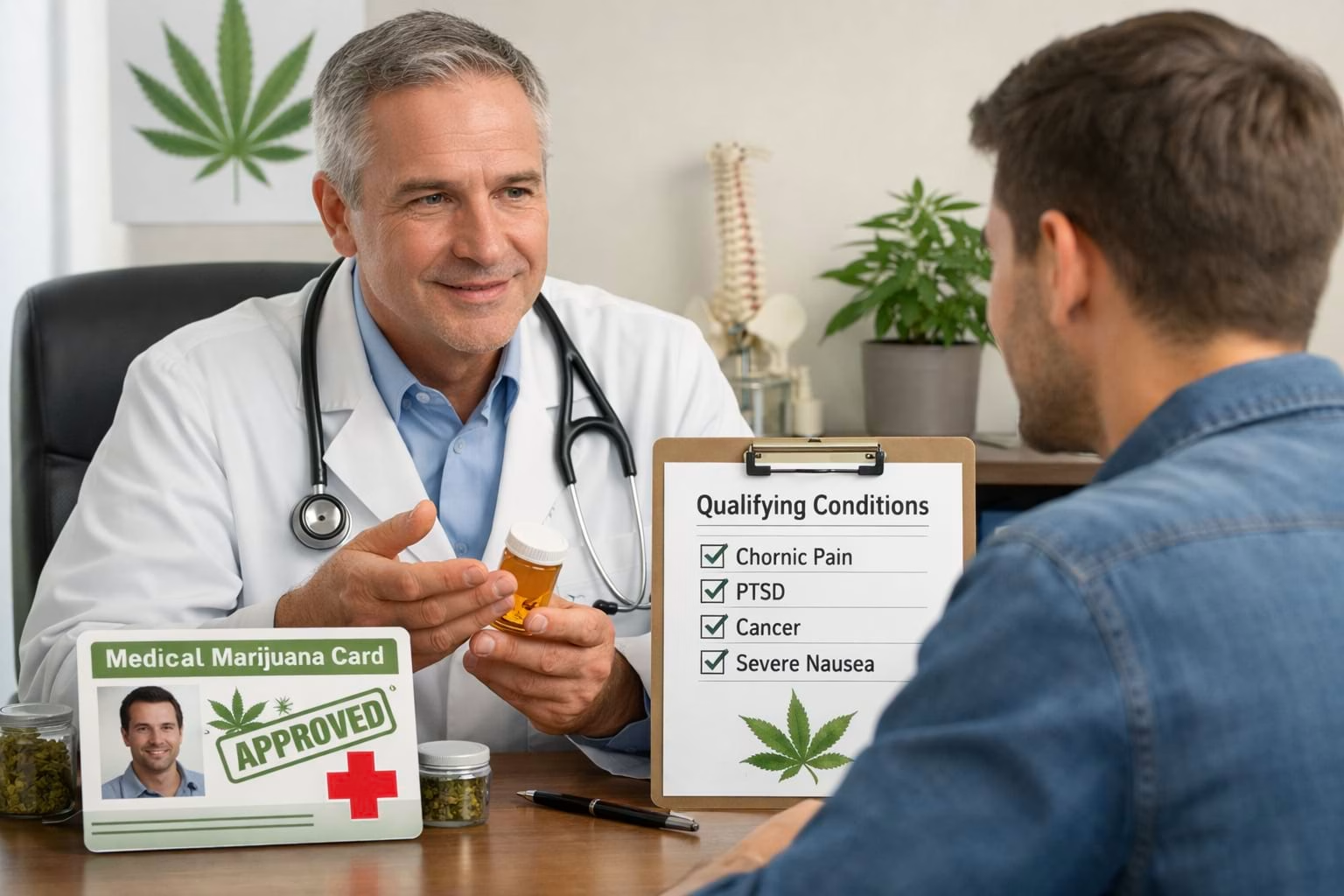
A marijuana doctor is a licensed medical provider who checks if you qualify under your state’s medical marijuana program. If you do, they give you a physician certification. Afterward, you use that certification to apply for your medical marijuana card.
Fundamentally, they assess your symptoms, medical history, and current treatments. Then they match all of that to your state’s rules so you can access cannabis legally.
A good marijuana doctor does more than sign paperwork. They explain the possible benefits and risks. They talk about safer ways to use THC products. They also help you plan for follow-ups and renewals. And since medical marijuana laws vary by state, having someone guide you can make the whole process feel much easier.
In this article, we’ll cover what these doctors do, what an evaluation looks like, and how to find a provider you can trust near you.
By the end of this page, you will have the answers to these questions:
- What does a marijuana doctor do during a medical cannabis evaluation?
- How is a marijuana doctor different from a dispensary employee or a primary care physician?
- Who can be a marijuana doctor in the U.S.?
- What happens during a medical marijuana evaluation?
- What symptoms do people commonly seek medical cannabis for?
- What should you know about the risks and side effects of cannabis?
- How to get a medical marijuana card?
- How to choose a good marijuana doctor?
- What do renewals look like?
Looking for a Medical Marijuana Doctor?
What Does a Marijuana Doctor Do?
When you decide to explore medical cannabis, a marijuana doctor becomes your starting point. They are the gatekeepers to the process. And they help you move forward the right way.
First, a cannabis doctor checks if you qualify under your state’s program. They review your symptoms and medical history. Then they confirm whether you meet the requirements for a medical marijuana card. If you do, they certify you so you can complete your state registration.
But their role goes beyond paperwork. A good MJ doctor explains what to expect. They talk about possible side effects. They help you think through safe dosing and create a simple safety plan. That way, you are not left guessing.
It is also important to understand what medical marijuana doctors do not do. They do not sell cannabis. And they do not prescribe it like a typical medication. As explained in research on physician guidelines, because of federal law, a marijuana doctor can only certify that you have a qualifying condition. That certification is what allows you to access cannabis legally in your state.
Put simply, they guide you through the rules, confirm your eligibility, and help you approach cannabis use in a safer and more informed way.
Marijuana Doctor vs. Your Regular Doctor vs. Dispensary Staff
It’s easy to mix up the roles of your regular doctor, a marijuana doctor, and dispensary staff. But a cannabis doctor, also called an MJ doctor, serves a very different purpose. Knowing the difference can save you confusion later.
A Primary Care Clinician
Your primary care clinician is the doctor who knows your health story best. They manage your diagnoses, order labs and imaging, and oversee your long-term care.
In some states, they can also certify patients for medical cannabis. But not every doctor chooses to join a medical marijuana program. Some clinics simply opt out, even if cannabis therapy is legal in your state.
A Marijuana Doctor
A marijuana doctor focuses on one thing. Helping you access medical cannabis the right way.
An MJ doctor evaluates your eligibility and ensures you meet your state’s rules. They understand program requirements, renewal timelines, and the necessary paperwork. That keeps you compliant from start to finish.
A marijuana doctor also provides cannabis-specific guidance. They talk through common product types and how patients typically use them. Some people even call them a THC doctor because of their experience with THC-based products.
In short, they guide you through the system, helping you move forward with clarity and confidence.
A Dispensary Employee (Budtender)
A dispensary employee, often called a “budtender,” helps you understand what is on the menu. They explain the different products, how they work, and what is currently available. They can also guide you on how to shop within your state’s rules.
But they are not medical providers. They cannot diagnose you. They cannot give medical advice. And they cannot issue a certification for a medical marijuana card.
Some dispensaries offer more hands-on support for patients. For example, Ascend Cannabis Dispensaries in Pennsylvania highlights personalized guidance for cardholders. Their team helps patients navigate the state program and feel comfortable, whether it is their first visit or not.
Still, their role is retail support, not medical care. They help you choose from what is available. Your medical decisions, however, should come from a qualified doctor.
Who Can Be a Marijuana Doctor in the U.S.?
Not every doctor can sign off on a medical marijuana card. The rules depend on your state, so it helps to know who actually qualifies as a marijuana doctor before you book an appointment.
In most states, a marijuana doctor must meet these basic standards:
- Active MD or DO license in your state
- Good standing with the state medical board
- Authorization to participate in the state’s medical marijuana program
Some states also allow advanced practice clinicians to serve as cannabis card doctors, but only under specific rules. These advanced practice clinicians may include:
- Nurse practitioners
- Physician assistants
- Other licensed clinicians approved by the state
Many states require extra steps before someone can become a certified marijuana doctor. That often includes:
- Registering with the state medical cannabis program
- Completing the required cannabis education
- Following state-specific compliance rules
For example, in New York, medical marijuana doctors must:
- Hold an appropriate practitioner license
- Have a valid DEA registration
- Complete a two-hour cannabis education course
- Use the state’s Medical Cannabis Data Management System
- Check the Prescription Monitoring Program before issuing or editing a certification
There is usually no separate state fee just to become a cannabis doctor, but clinicians may pay for required education courses. For patients, costs come later during the evaluation and state registration process.
How to Verify a Cannabis Doctor Is Legitimate
Not every marijuana doctor you see online is qualified to certify you. A few quick checks can help you avoid scams and make sure you are working with the right provider.
Start by confirming the doctor’s license. You can do this by visiting your state’s medical board website and searching for their name. The license should be active and in good standing.
Then ensure they follow your state’s certification process. A legitimate cannabis doctor will:
- Review your medical history
- Evaluate your qualifying condition
- Follow your state’s required steps before issuing a certification
Be cautious of clear red flags, for example:
- Guaranteed approval
- No medical history review
- Skipping required paperwork
Some states make verification easier by publishing directories. For example, the Ohio Medical Marijuana Control Program lists physicians with active Certificates to Recommend on its official website. Keep in mind, most programs do not refer patients to specific doctors. They only confirm who is authorized.
All our cannabis doctors at Quick Med Cards are certified to recommend medical marijuana in your state, and they follow all the required rules. Remember, a legitimate provider will be licensed, compliant, and transparent about the process.
What Happens During a Medical Marijuana Evaluation?
It’s a consultation where a marijuana doctor decides whether medical cannabis makes sense for you under your state’s rules.
The visit itself is usually straightforward. It feels like a normal outpatient appointment. Your cannabis doctor reviews your medical history, asks about your symptoms, and looks at what you have already tried. If you qualify, they issue your MMJ recommendation and explain your next steps.
Most weed evaluations cover the following:
- Your diagnoses and symptom history
- Medications you are taking, including opioids or sleep meds
- Possible risks and benefits
- Basic product guidance if approved
- How to complete your state application
If you’re ready to talk with a licensed provider about whether you qualify, you can take the first step online in minutes.
What Should You Bring?
Come prepared with the following documents so the conversation stays about your health, not missing paperwork:
- Government-issued photo ID
- Relevant medical records, if you have them
- A current medication list
- Notes about your symptoms and what you have tried
If you don’t have perfect records, don’t panic. Many patients can still be evaluated based on clinical history, depending on state rules and the provider’s judgment.
What Will the Conversation Sound Like?
Expect practical questions. A weed doctor may ask what symptoms you are trying to manage and how they affect your day. They will want to know what treatments you have already tried and how they worked. If you have used cannabis before, they may ask how it felt. They may also review mental health history or pregnancy status if relevant.
These questions are not meant to judge you. They help the clinician reduce risk and decide whether certification is appropriate.
Online or In Person?
Your evaluation may happen through cannabis telemedicine or in person. Many states allow first-time patients to see a weed doctor online, for example:
However, some states still require an in-person visit for first-time patients, for example:
Because rules change, always confirm your state’s current requirements.
What About Cost?
The price of a medical marijuana card varies by state and provider. Often, state programs offer reduced rates for veterans or patients who qualify for assistance programs. Remember, state registration fees are separate from medical evaluation fees.
What Symptoms Do People Commonly Seek Medical Cannabis For?
Relief is usually the main reason people book the appointment.
Your state decides the official qualifying conditions for a medical card. Then, that list determines which illness is fit for cannabis treatment. But in practice, most patients see a marijuana doctor for symptoms that fall into a few common groups.
Chronic pain is one of the biggest. A 2025 review found the strongest evidence for neuropathic pain and multiple sclerosis. Some patients were even able to reduce opioid use. Migraine relief was also reported with inhaled cannabis. Still, the study revealed that the average pain reduction was modest. So, cannabis may help, but it is not a magic switch.
Cancer-related symptoms are another common reason. A 2024 clinical trial showed that adding cannabis capsules to standard anti-nausea medication improved control of chemotherapy-induced nausea. A larger 2025 meta-analysis also found strong scientific support for pain relief, appetite stimulation, and anti-inflammatory effects in cancer care. At the same time, side effects like dizziness and sedation were common. A good cannabis doctor should explain both sides.
PTSD, anxiety, and sleep problems also bring people in. A 2025 observational study showed improvements in PTSD symptoms and sleep quality over 18 months. Another review found that high-dose CBD may ease short-term anxiety, and THC plus CBD combinations may improve sleep. But THC was also linked to worsening psychosis in some cases. That is why cannabis physicians screen carefully before certifying.
Medical cannabis can support symptom relief, but it is rarely a first-line treatment. A responsible marijuana doctor will set realistic expectations and guide you safely.
How Does a Marijuana Doctor Think About THC and Symptom Relief?
This is where experience matters. THC can help, but only when it is used with purpose and control.
A good marijuana doctor does not treat THC like a cure. They treat it like a tool. The goal is symptom support, not intoxication.
When deciding if THC makes sense, a cannabis doctor considers:
- Target symptoms such as pain, sleep issues, spasms, appetite, or nausea
- Past cannabis experience and sensitivity
- Route of use and how quickly it takes effect
- Tolerance level and side effect risk
Route matters more than most people realize. Inhaled products act quickly and wear off faster. Oral products take longer to kick in but last longer. Sublingual options fall somewhere in between. An experienced MJ doctor matches the method to the symptom pattern.
Side effects are part of the equation. Dizziness, sedation, and impaired focus are common concerns. A responsible THC doctor plans around them, especially for people who work, drive, or take other medications.
Instead of rushing to higher amounts, many cannabis physicians build upward gradually. They often suggest beginning with a very small amount, tracking the response, and adjusting in measured steps over several days. The focus is steady improvement, not dramatic swings. If you are considering edibles, our edible dosage calculator can help you estimate a starting range before your visit so the conversation stays practical.
A thoughtful marijuana doctor aims for balance. Enough THC to improve daily function. But not so much that side effects take over. When guided properly, relief becomes intentional, not accidental.
What Should You Know About Risks and Side Effects?
Medical cannabis can help. But it is still a drug. And like any medication, it comes with risks.
Common side effects include dizziness, drowsiness, dry mouth, short-term memory issues, anxiety, and an increased heart rate. Impairment is also possible. So, if you feel altered, please do not drive or operate machinery.
THC affects the brain. In some people, especially at higher doses, it can worsen paranoia or trigger symptoms linked to psychosis. There is also a dependence risk. Frequent high THC use increases the chance of developing cannabis use disorder. Also, mixing cannabis with alcohol, sedatives, or certain psychiatric medications can make side effects stronger.
Medical cannabis works best when it is guided by a certified marijuana doctor, not guessed. A proper evaluation helps you reduce risk while pursuing relief.
How to Get a Medical Marijuana Card?
Getting a medical marijuana card is easy. While the process may vary depending on the state you come from, the basic flow involves the following:
- Schedule an evaluation with a licensed marijuana doctor.
- Attend your medical marijuana evaluation and get certified.
- Submit your medical card application through your state’s medical cannabis registry.
- Receive your medical marijuana card and purchase from a licensed dispensary.
If you’d like a more detailed breakdown, our guide on how to get a medical marijuana card could prove useful.
At Quick Med Cards, our certified medical cannabis doctors have helped thousands of patients across the country. We don’t just offer certifications; we guide you toward real relief from chronic conditions and help you reclaim a healthier, more balanced life.
How to Choose a Good Cannabis Doctor?
Once you confirm a provider is legitimate, the next question is quality. This matters because your visit should feel like medical care, not paperwork.
Not all providers practice the same way. Some rush through the evaluation. Others take the time to understand your health history and explain what comes next. That difference shapes your entire experience.
Signs you are in the right place:
- Reviews your medical history and medications carefully
- Explains risks and safer use basics
- Follows state rules for telehealth or in-person visits
- Discusses renewal timing and next steps
Warning signs to walk away from:
- Pressure to buy products
- Ties to a specific dispensary
- No discussion of risks
- No guidance after certification
A good provider makes the process feel structured and transparent. You understand what is happening and why.
If you are comparing options, we also break down trusted platforms in our guide on the best online medical marijuana providers. It can help you evaluate services before booking.
The right choice is not just about getting approved. It is about receiving proper care and guidance from your first visit through renewal.
What Do Follow-Ups and Renewals Usually Look Like?
Renewals matter because your card does not last forever. In most states, you must recertify on a regular schedule, often annually. The exact timing depends on where you live.
The renewal appointment is usually straightforward. The doctor’s main job is to confirm you still qualify and complete the required paperwork.
During the visit, the certifying physician will do the following:
- Confirm you still meet state eligibility rules
- Review your updated medical history
- Check for any new diagnoses or medications
- Complete your renewal certification
It is still a medical visit. So if anything has changed, this is your time to say it. You could bring up the following:
- Share any changes to your condition since your last certification.
- Mention new diagnoses, medications, or major health updates.
- Ask any questions you want covered.
If needed, you can also discuss:
- Products you have been using and the dose
- Whether you are getting relief and how quickly
- Side effects such as anxiety or grogginess
- Changes to other medications
- Whether the use has increased beyond your intention
If something is not working, a good clinician will adjust the plan. That may mean lowering THC, switching products, or even stopping.
Conclusion
All marijuana doctors are doctors. But not all doctors are marijuana doctors. The difference matters.
A medical marijuana doctor understands state rules, certification requirements, and how cannabis actually fits into a treatment plan. They do more than approve paperwork. They guide you through the process, explain risks, and help you use cannabis responsibly.
That is exactly what we do at Quick Med Cards. We make the certification path simple, fast, and affordable. But we do not stop there. Our doctors are experienced, professional, and compassionate. They care about your well-being before, during, and after you receive your medical card. Thousands of patients across more than 20 states have trusted us not just for certification, but for real guidance and support.
If you are ready to move forward, choose a team that makes the process easy and puts your health first.
Key Takeaways
- A marijuana doctor is a licensed provider who determines whether you qualify for medical cannabis under your state’s program.
- Certification from a marijuana doctor is required before you can apply for a medical marijuana card.
- The evaluation includes a review of your symptoms, medical history, and current medications.
- Medical cannabis may help with conditions like chronic pain, cancer-related symptoms, PTSD, anxiety, and sleep issues, but it is not a guaranteed fix.
- THC must be used thoughtfully because side effects and risks are real.
- Renewals are required in most states, often once a year, to keep your card active.
- Choosing a qualified and compassionate provider makes the entire process safer and easier.
Frequently Asked Questions
Below are answers to common questions about who a marijuana doctor is.
Can doctors prescribe weed?
No, doctors cannot prescribe weed.
Because medical marijuana is not FDA-approved and is still classified as a Schedule I controlled substance, most states do not allow traditional prescriptions. Instead, doctors issue a certification or recommendation that lets you apply for a medical cannabis card.
However, doctors can prescribe cannabinoid medications like Marinol. Marinol is dronabinol, a pharmaceutical form of THC that is FDA-approved and can be prescribed through a pharmacy. It is also a Schedule III controlled substance. That makes it a prescription drug, but it is not the same thing as “medical marijuana” sold through state cannabis programs.
Is a marijuana certification the same as getting a prescription?
No, a marijuana certification is not the same as getting a prescription.
State medical marijuana programs usually use a physician certification or recommendation instead of a traditional prescription. That certification confirms you have a qualifying condition and allows you to apply for a medical marijuana card under your state’s rules.
If you want to understand the process in more detail, we also explain how an online medical marijuana certification works and what to expect step by step.
What if I've never used cannabis before?
It’s okay if you’ve never used cannabis before.
That’s actually common. You can speak with a cannabis doctor before booking your certification appointment. They can explain THC sensitivity, walk you through safer dosing, and help you avoid overdoing it. This is especially important with edibles, since they take longer to kick in and can feel stronger than expected.
Can a marijuana doctor help me choose products?
Yes, a marijuana doctor can help guide you on product choices.
They can provide general advice about onset time, duration, and how THC may affect your symptoms. Once you have that guidance, dispensary staff can help you find a product in your state’s marketplace that matches those recommendations.
What conditions qualify for a medical marijuana card?
It depends on your state.
Most states publish a list of qualifying conditions for a medical marijuana card. Chronic pain is one of the most common. Other examples often include ALS, anorexia, epilepsy, glaucoma, Hepatitis C, and Parkinson’s disease. These are usually debilitating conditions that have not responded well to conventional treatments.
That said, the exact list and documentation requirements vary. Some states, like Hawaii, give doctors more discretion to decide whether medical cannabis may benefit your health, even if the condition is not considered severe on paper.
Can I do a marijuana doctor visit online?
Yes, in many states, you can do a marijuana doctor visit online.
Telehealth rules vary. Some states allow online evaluations for first-time patients. Others require an in-person exam before certification. The rule depends entirely on where you live.
To be sure, review your state’s cannabis laws. You can also see our guide that lists which states allow telehealth and which require in-person visits, along with examples.
Can a psychiatrist prescribe medical weed?
Yes, a psychiatrist can recommend or certify medical cannabis if state law allows it.
Psychiatrists are physicians, either MDs or DOs. So when a state program says a “physician” or “licensed physician” can recommend medical cannabis, psychiatrists fall under that category.
However, being a physician alone is not enough. There are additional state-specific requirements to become a marijuana doctor, such as registration or program approval, before they can issue certifications.
Disclaimer: This article is for informational purposes only and does not provide medical or legal advice. Medical cannabis laws vary by state and change over time. Always consult a licensed health care professional about your specific medical situation, medications, and risk factors, and follow your state’s medical marijuana program rules.
Get Your Medical Marijuana Card
Same-day appointments available for online medical marijuana evaluation.
Get your certification now!