
Can You Get a Medical Marijuana Card for Anxiety?
Written by QuickMedCards. Updated March 26, 2026
If you are struggling with anxiety, you might be wondering if medical cannabis is a real option for you. You are certainly not alone in this. Millions of people in the U.S. live with anxiety every day. Many of them are asking the same question: Can I get a medical marijuana card for anxiety?
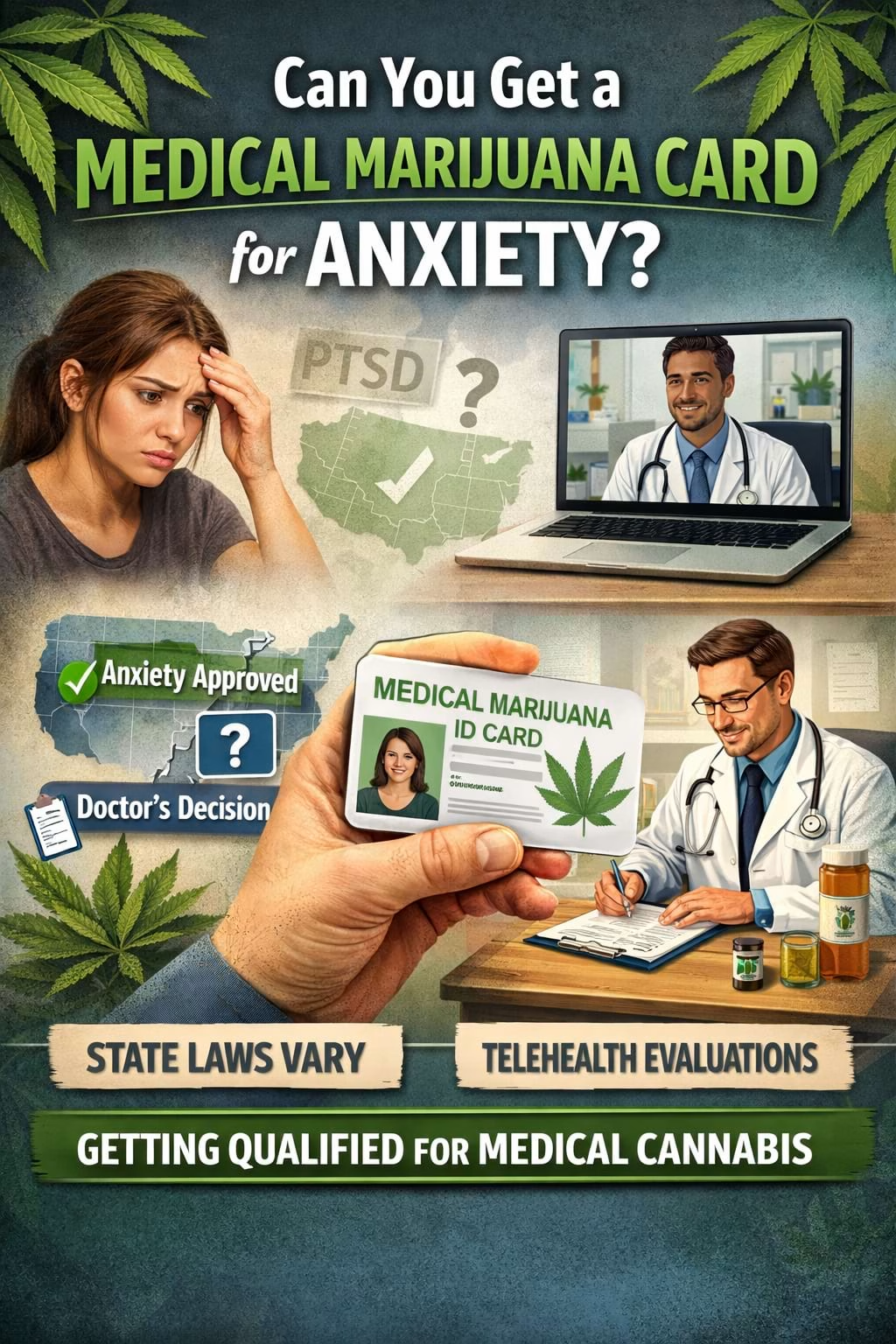
The answer depends on where you live. Every state has its own set of rules for who qualifies. To get a card, your state must officially list anxiety as a qualifying condition. If it does, you will need to meet with a licensed provider to get a certification.
The process is becoming much easier. Many states now allow you to have your appointment through telehealth. This means you can talk to a doctor over video or phone. You can complete your entire evaluation without ever leaving your home.
A qualifying condition is simply a medical diagnosis that your state approves for cannabis use. Once a doctor confirms you have one, they provide the written approval you need. You then use that document to apply for your official state card.
This guide gives you a clear and honest look at how medical cannabis works for anxiety. We explain what doctors look for during an exam. We also dive into what the latest research actually says. Finally, we will help you figure out your very next steps.
By the end of this page, you will have the answers to these questions:
- Can you get a medical marijuana card for anxiety?
- What states allow a medical marijuana card for anxiety?
- What do doctors check before approving medical cannabis for anxiety?
- What does research say about marijuana and anxiety?
- How to get a medical marijuana card for anxiety?
Looking for a Medical Marijuana Doctor?
Can You Get a Medical Marijuana Card for Anxiety?
Whether anxiety qualifies depends on your state’s medical cannabis rules, your diagnosis, and a provider’s medical judgment.
Why Your State Laws Matter
State governments, rather than the federal government, regulate medical cannabis. Each state writes its own rules to decide which health conditions qualify for a card. These laws also determine how patients must register for the program.
States usually handle anxiety in one of three ways. Some states list anxiety disorders directly. Some leave the decision to the provider’s judgment. Others do not list anxiety at all and may require a related diagnosis instead.
State rules can change, so always verify your eligibility with your state program or a licensed provider.
Anxiety vs. PTSD vs. Symptom-Based Eligibility
It is important to understand that anxiety and PTSD are different clinical diagnoses. Even though they share similar symptoms, they are treated differently under medical cannabis laws.
Post-Traumatic Stress Disorder (PTSD) is one of the most widely recognized qualifying conditions in the United States. If past trauma triggers your anxiety, you should have a conversation with your healthcare provider. Why? Because a PTSD diagnosis may provide a clearer path to medical marijuana certification in states where general anxiety is not an eligible condition.
What States Allow a Medical Marijuana Card for Anxiety?
Anxiety is one of the most common reasons patients seek medical cannabis. Whether you can legally get a medical marijuana card depends entirely on your state laws.
1. States That Explicitly Include Anxiety Disorders
A few states list anxiety directly on their official qualifying conditions list. These states include:
- Nevada
- New Hampshire
- New Jersey
- New Mexico
- North Dakota
- Pennsylvania
Pennsylvania serves as a leading example. The Department of Health includes anxiety disorders as one of its 24 qualifying conditions. Currently, anxiety is the most common reason patients enroll in the state’s medical marijuana program.
New Jersey also explicitly lists anxiety as a qualifying condition. The Medicinal Cannabis Program approves several conditions. These include cancer, chronic pain, and PTSD. Anxiety officially qualifies there as well.
North Dakota includes anxiety disorder on its official list of debilitating medical conditions.
2. States That Leave Eligibility to Provider Judgment
Some states take a different approach entirely. Rather than publishing a fixed list of qualifying conditions, they allow licensed physicians to use their professional judgment. These states include:
Oklahoma is a well-known example. According to the State Board of Osteopathic Examiners, the state does not maintain a list of qualifying conditions. Instead, a registered physician determines if medical marijuana is appropriate for a patient.
California operates similarly. The Medical Board of California states that recommending cannabis is at the professional discretion of the physician. As long as they act within the standard of care, a California provider can certify a patient with anxiety if they believe it is clinically appropriate.
3. States That May Require a Related Diagnosis
In many states, anxiety alone is not enough to qualify. You might need a diagnosis like PTSD or another severe condition instead. For example, Texas lists PTSD as a qualifying condition but leaves out general anxiety. If you live in one of these states, a doctor can still help. They will review your overall health, past trauma, and other conditions to see if you can be certified.
You can review your state’s specific rules on our State Cannabis Laws page.
If your state allows it, the next step is to speak with a licensed provider to see if you qualify.
What Do Doctors Check Before Approving Medical Cannabis for Anxiety?
Obtaining a medical marijuana card is a formal clinical process and is not automatic. Before your appointment, it’s helpful to know what to expect during the consultation. Even in states where anxiety is a qualifying condition, a licensed provider must conduct a medical evaluation before certifying a patient.
Symptoms, Diagnosis, and Treatment History
Most providers want to understand the full picture of your mental health before making a recommendation. To evaluate your needs, a provider will typically ask questions such as:
- How long have you been experiencing symptoms of anxiety?
- Do you have a formal diagnosis from a doctor or a mental health professional?
- How severe are your symptoms, and how do they affect your daily life?
- What treatments have you already tried, such as therapy, medication, or lifestyle changes?
- Were those prior treatments effective, or did they cause uncomfortable side effects?
Doctors usually look for three main factors. First, they want to see that your anxiety is ongoing. Second, they need to know that it disrupts your daily routine. Third, they often check if you have already tried standard treatments. While an official diagnosis from a doctor or therapist helps your case, some states do not strictly require one.
When a Provider May Say No
Not every patient with anxiety will receive a certification. This is true even in states where anxiety is a qualifying condition. Providers may decline a recommendation if they have specific safety concerns. These concerns often include:
- A personal or family history of psychosis or schizophrenia
- A history of substance misuse or cannabis use disorder
- Pregnancy or breastfeeding
- Age-related concerns, particularly for younger patients
- Potential interactions with current medications, including benzodiazepines or antidepressants
- Cases where the provider believes cannabis may worsen anxiety symptoms rather than relieve them
Both NIMH and SAMHSA emphasize that anxiety requires professional diagnosis and treatment. A responsible provider will weigh all of these factors carefully. They want to ensure that medical cannabis is a safe and helpful option for your specific situation.
What Does Research Say About Medical Marijuana for Anxiety?
Many people find relief using medical marijuana for anxiety. However, the science behind it is still limited. It is important to understand both the potential benefits and the side effects before trying it.
What the Evidence Suggests So Far
Research on cannabis and anxiety is still in the early stages. Evidence suggests cannabinoids may reduce anxiousness. However, these effects often depend on the dose. High doses of THC can sometimes increase panic or paranoia. Researchers highlight the need for more data to confirm safe and effective therapeutic levels.
The effects can also change depending on the compounds you use. For example, CBD and THC interact with the body in very different ways. While some find short-term symptom relief, cannabis affects every person differently. To learn more, you can read our full guide on whether marijuana helps with anxiety.
Risks, Side Effects, and Mental Health Concerns
Cannabis is not risk-free. This is especially true for people who are sensitive to THC or those already managing mental health conditions. Organizations like SAMHSA have noted links between marijuana use and depression, anxiety, or even psychotic episodes. Researchers are still trying to determine if marijuana causes these issues or if other factors are at play.
In New Jersey’s official cannabis guide, experts explain that THC often has a two-sided effect:
- Small doses: These may help you feel calm and relaxed.
- Large doses: These can actually make your anxiety feel much worse.
Ultimately, you should use cannabis carefully and with a licensed provider’s guidance. A medical professional can guide you on the right dosage and approach. Never use cannabis to replace therapy or professional mental health care. It should be used as a support tool, not a substitute for expert medical advice.
How to Get a Medical Marijuana Card for Anxiety
Getting a medical marijuana card for anxiety can seem like a complex process. If you believe you may qualify, here is a practical guide to help you navigate the steps.
Steps to Get a Medical Marijuana Card for Anxiety
The process generally follows these six steps:
- Check your state’s rules. Not every state allows anxiety as a qualifying condition. Start by reviewing your state’s program on our State Cannabis Laws page.
- Gather your medical records. Collect any documentation of your anxiety diagnosis, treatment history, and prior medications. This helps your provider conduct a thorough evaluation.
- Book an evaluation with a licensed provider. Quick Med Cards connects patients with licensed medical cannabis providers in their state. You can talk to a doctor online from the comfort of your home. Most states allow residents to use telehealth.
- Receive your certification if you qualify. If the provider determines that medical cannabis is appropriate for your situation, they will issue a written certification. You can learn more about how the online certification process works to prepare for your appointment. This ensures your evaluation goes smoothly.
- Complete your state’s registration. Most states require patients to register with the state program and pay a fee before receiving their card.
- Purchase only from licensed dispensaries. Once you have your card, you can purchase medical cannabis products from state-licensed dispensaries.
Following these steps makes the process straightforward. Always follow your state’s official guidelines to stay compliant and make the most of your certification.
Questions to Ask Before Your Appointment
Being prepared for your evaluation can make the process much smoother. Consider asking your provider these questions:
- Does my state allow anxiety as a qualifying condition?
- Would a PTSD diagnosis or another related condition affect my eligibility?
- What risks matter most given my personal health history?
- Could cannabis interact with my current medications?
- Is telehealth available for my evaluation in my state?
Ready to take the next step? Book your medical cannabis evaluation today and get certified for medical marijuana.
Conclusion
Anxiety may qualify you for a medical marijuana card, but it depends on your state and your medical history. The best next step is to check your state’s rules and speak with a licensed provider who can evaluate your situation.
If traditional treatments have not provided enough relief, a licensed marijuana doctor can help you weigh the potential benefits and risks. In many states, you can complete the process through a secure telehealth appointment from home.
Key Takeaways
- Anxiety may qualify for a medical marijuana card in some states, but not all. The rules vary significantly by state.
- In some programs, a related diagnosis such as PTSD may matter more than anxiety alone.
- A provider will typically review your symptoms, treatment history, and safety concerns before approving cannabis.
- Research on cannabis for anxiety is still limited and mixed. Strong clinical evidence is lacking.
- Higher-THC products may worsen anxiety for some people due to the biphasic nature of THC.
- Check your state’s rules and speak with a licensed clinician who can evaluate your full health picture.
Frequently Asked Questions
Below are answers to common questions about qualifying for a medical marijuana card for anxiety.
Can anxiety qualify for a medical marijuana card in every state?
No. Anxiety is not a universal qualifying condition. It is explicitly listed in only a few states, such as Pennsylvania, New Jersey, and North Dakota. Many other states leave the decision to the discretion of a licensed provider. Always check your specific state laws before you apply.
Do I need a formal diagnosis to get a medical marijuana card for anxiety?
It depends on your state. Some states require a formal diagnosis from a mental health professional. Other states allow a certifying provider to evaluate your symptoms during your appointment. Providing medical records of a prior diagnosis usually helps speed up the approval process.
Can PTSD help me qualify if anxiety alone does not?
Yes. PTSD is a widely recognized qualifying condition in almost every medical cannabis program. If your anxiety is related to trauma, a PTSD diagnosis may qualify you. This remains true even in states where anxiety disorder is not listed.
Can I use telehealth for a medical cannabis evaluation?
In many states, yes. Telehealth allows you to meet a licensed provider via video or phone. However, telehealth rules vary by state. You should confirm your local regulations or check with your provider before you schedule an appointment.
Can I still qualify if I already take anti-anxiety medication?
Yes. Taking prescription medication does not automatically disqualify you. However, you must be transparent with your provider about all current medications. Cannabis can interact with certain drugs, such as benzodiazepines and antidepressants. Therefore, full disclosure ensures your provider can make a safe recommendation.
Disclaimer: This article is for informational purposes only and does not constitute medical or legal advice. Medical cannabis laws vary by state and are subject to change. Always consult a licensed healthcare provider and review your state’s official program rules before making any decisions about medical cannabis.
Get Your Medical Marijuana Card
Same-day appointments available for online medical marijuana evaluation.
Get your certification now!